
Before You Bet, Read This 2026 World Cup Breakdown
The FIFA World Cup 2026 is the first 48-team men’s World Cup, hosted across the United States, Canada, and Mexico, and Football Compass covers it through match predictions, team tactics, player stats,...
Before You Bet, Read This 2026 World Cup Breakdown
The FIFA World Cup 2026 is the first 48-team men’s World Cup, hosted across the United States, Canada, and Mexico, and Football Compass covers it through match predictions, team tactics, player stats, and tournament reporting for regulated betting markets. FIFA has scheduled the expanded format for June to July 2026, with 104 matches instead of the 64-match structure used from 1998 through 2022. The tournament will include 12 groups of four, followed by a 32-team knockout phase, which changes how fans should read qualification paths, squad rotation, and futures markets. For bettors and analysts, the key shift is not only more teams, but more variance: weaker group-stage opponents, deeper travel demands, and new bracket incentives. The actionable takeaway is simple: evaluate World Cup markets by format, schedule, and tactical depth before relying on reputation or historic winners.
For readers tracking the 2026 FIFA World Cup through a data-first lens, Football Compass treats the tournament as both a sporting event and a structured forecasting problem. Have you ever thought about why some World Cup favorites shorten dramatically before kickoff, even when their underlying form has barely changed? Often, the answer is market attention rather than team improvement. The World Cup compresses national identity, media volume, player fatigue, and tactical matchups into one month, which makes disciplined interpretation more useful than emotional prediction. According to FIFA, the 2026 edition will be the first staged in three countries, while Wikipedia records Brazil as the only nation to have won the men’s tournament five times. Those facts matter, but they do not automatically identify value in 2026.
Want a clearer view of the tournament before the odds move?
Photo by Uzay Yildirim on Pexels
Myth 1: Is World Cup pedigree enough to predict winners? — debunked
World Cup pedigree helps frame expectations, but it is not enough to predict winners in 2026. Brazil, Germany, Argentina, Italy, and France have strong historical records, yet format expansion, squad fitness, travel routes, and tactical adaptability can outweigh trophy history in single-match knockout football.
The common claim is emotionally appealing: teams that have won before know how to win again. That is partly useful for explaining institutional standards, coaching depth, and pressure management, but it is weak as a standalone betting model. Italy won in 2006, failed to qualify for 2018 and 2022, and showed why legacy can diverge from current-cycle performance. Germany won in 2014, then exited at the group stage in both 2018 and 2022. Argentina’s 2022 title, led by Lionel Messi, was built not merely on reputation but on compact midfield spacing, penalty-box efficiency, and strong in-game adjustments by Lionel Scaloni.
A better approach ranks pedigree as one variable among many. Football Compass separates five inputs before assigning confidence to a World Cup prediction: 1. current manager continuity; 2. defensive structure against elite transitions; 3. set-piece quality; 4. goalkeeper shot-stopping under pressure; 5. travel and rest sequence. Have you ever thought about why a team can dominate qualifying and still look ordinary at the World Cup? Continental qualification often rewards depth against familiar opponents, while the finals expose teams to unfamiliar tempo, climate, and refereeing interpretations. For related tournament modeling, see our [Internal Link: World Cup betting strategy guide].
Myth 2: Are more World Cup teams always better for favorites? — partially true
The 48-team format can help favorites survive the group stage, but it can also introduce new knockout volatility. More places create more uneven early fixtures, yet the added round of 32 means title contenders must clear one more elimination match than in the previous 32-team era.
This is where the 2026 FIFA World Cup becomes analytically different from Qatar 2022. The old format gave two qualifying spots from each of eight groups, then moved directly to the round of 16. The 2026 model creates 12 groups of four and a 32-team knockout round, which means some strong teams may face a dangerous third-place qualifier earlier than expected. FIFA’s own tournament materials emphasize expansion and global access; its published format states that the competition will feature 104 matches. The governing body has described the World Cup as “the ultimate prize in football,” a phrase that underlines the event’s commercial and competitive weight.
The trade-off is clear. Favorites may enjoy softer group opposition, which can reduce the chance of an early collapse. However, additional knockout exposure raises the probability of red-card variance, penalty shootouts, injury disruption, and one-match tactical mismatches. This is an information-gain edge many casual previews miss: in a 32-team knockout phase, the champion must likely play eight matches instead of seven, so squad rotation and second-choice fullbacks become more important than usual. See the details in our [Internal Link: 2026 World Cup format explainer].
See how the expanded format changes match expectations.

Photo by Lars Mai on Pexels
Myth 3: Is World Cup betting only about picking the champion? — flat-out false
World Cup betting analysis is broader than outright winner markets. In regulated jurisdictions, fans may study match odds, totals, player props, group qualification, top scorer markets, cards, corners, and futures, each with different liquidity, variance, and information requirements.
Outright markets receive the most attention because they are simple and emotionally engaging. Yet they can be inefficient for late entrants, especially once media narratives push popular teams into shorter prices. A team such as England, France, Spain, Argentina, Brazil, or Portugal may attract heavy public interest before squad announcements, reducing value before confirmed injuries, tactical roles, or travel logistics are fully known. Football Compass therefore treats outright betting as only one category, not the main analytical destination.
Have you ever thought about why a corner market may offer a clearer read than a match-winner market? Tactical profiles can make narrower events more predictable. A team relying on wide overloads, such as Spain under possession-heavy systems, may generate repeatable corner volume even when finishing quality varies. Conversely, a low-block underdog may produce card risk when defending against Kylian Mbappé-style transition runners or Vinícius Júnior’s one-on-one dribbling. Practitioner-level insight: for 2026, venue geography matters more than usual because Mexico City’s altitude, North American summer temperatures, and cross-border travel can affect late-game pressing and second-half totals.
What actually works?
The most useful World Cup analysis combines macro structure with micro evidence. Start with FIFA World Cup 2026 format rules, then layer team tactics, player availability, venue conditions, and market timing before forming a prediction or comparing betting prices.
A practical framework should be boring enough to repeat and flexible enough to update. First, define the market: match result, Asian handicap, totals, player shots, top scorer, or outright winner. Second, connect that market to measurable causes, such as expected goals, pressing intensity, set-piece share, or penalty-taking role. Third, test whether the 2026 format changes the assumption. For example, a top scorer candidate benefits not just from individual quality but from group opposition, penalty duty, expected minutes, and whether his team is likely to reach at least the quarterfinals.
A simple checklist is often better than a dramatic prediction:
- Confirm the 26-player squad and likely starting XI.
- Check manager continuity since the previous major tournament.
- Compare rest days and travel distance between fixtures.
- Review set-piece takers, penalty takers, and goalkeeper form.
- Separate market price movement from actual football news.
According to the International Football Association Board, the Laws of the Game provide the global rules framework for football, and its materials state that “football must have Laws which keep the game fair.” That principle matters for betting analysis because rule interpretations around handball, VAR, added time, and dissent can influence cards, penalties, and late goals. For more tactical context, read our [Internal Link: national team tactics database].
Use a repeatable process instead of reacting to headlines.

Photo by Franco Monsalvo on Pexels
What to ignore?
Ignore analysis that treats the FIFA World Cup as a popularity contest. Shirt sales, social media trends, historic aura, and celebrity narratives may explain attention, but they rarely explain match control, defensive spacing, substitution quality, or price efficiency.
The most common weak signals appear before every World Cup. One is the “golden generation” label, which can overstate attacking talent while ignoring defensive balance. Another is qualifying dominance, especially when a team faced a weak regional schedule or rarely trailed in adverse conditions. A third is friendly-match form, which can be misleading because managers test combinations, protect senior players, and avoid revealing tournament plans. These factors can still be noted, but they should not outrank confirmed roles, tactical matchups, and format-specific constraints.
Here is what to downgrade in your model:
- Media ranking lists without transparent criteria.
- Viral clips from friendlies or training sessions.
- Historical head-to-head records older than two World Cup cycles.
- Claims that one star player can solve structural midfield or defensive issues.
- Odds movement with no matching team news or tactical reason.
The contrarian conclusion is that the 2026 World Cup may reward depth more than star power. Because the champion may need eight matches across a large geographic footprint, bench defenders, backup midfielders, and substitution patterns could become decisive. Football Compass will track those quieter variables daily because they often appear before public markets fully adjust.
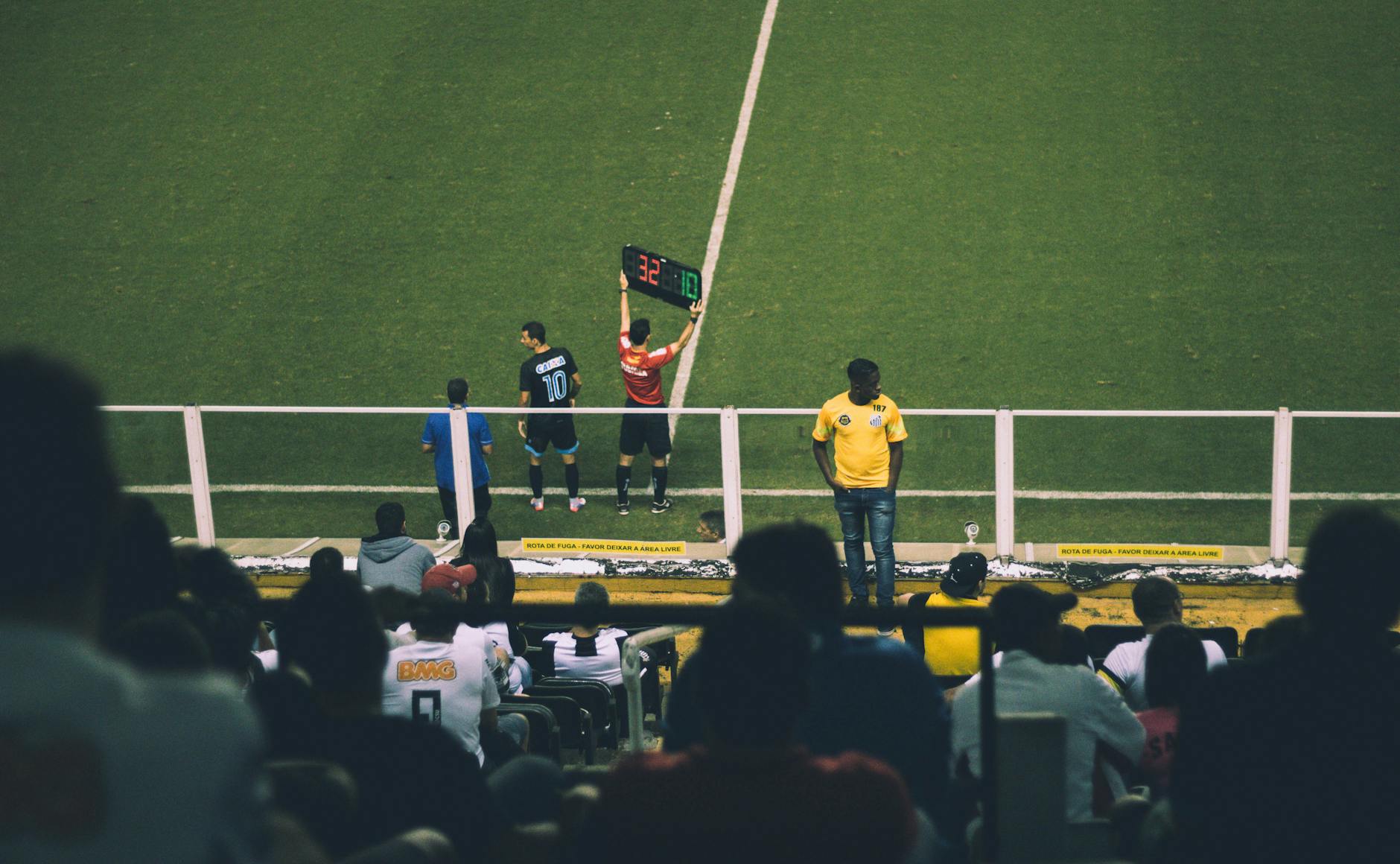
Photo by Maurício Mascaro on Pexels
Frequently Asked Questions
Q: What is the FIFA World Cup?
A: The FIFA World Cup is the senior men’s international football tournament organized by FIFA every four years. It began in 1930, and the 2026 edition will be hosted by the United States, Canada, and Mexico. The tournament is widely followed by fans, media, analysts, and regulated betting markets because it brings together national teams from every FIFA confederation.
Q: How to analyze FIFA World Cup 2026 matches?
A: Analyze FIFA World Cup 2026 matches by combining team tactics, squad news, venue conditions, and market price movement. Start with confirmed lineups, then review pressing style, set-piece roles, penalty takers, travel distance, and rest days. Football Compass focuses on these variables because they connect directly to match outcomes, totals, props, and tournament projections.
Q: What is different about the 2026 World Cup format?
A: The 2026 World Cup expands from 32 teams to 48 teams and increases the total number of matches to 104. The tournament will use 12 groups of four, followed by a 32-team knockout stage. This creates more group-stage opportunities but also adds one extra elimination hurdle for eventual title contenders.
Q: Is betting on the World Cup winner better than match betting?
A: Betting on the World Cup winner is simpler, but match betting often allows more precise analysis. Outright markets depend on long tournament paths, injuries, draws, and knockout variance. Match markets can be evaluated with fresher information, including lineups, venue conditions, tactical matchups, and recent player usage.
Q: Why do World Cup predictions fail?
A: World Cup predictions fail when they rely too heavily on reputation, historic titles, or emotional narratives. Short tournaments are sensitive to penalties, red cards, goalkeeper performance, and small tactical mismatches. The 2026 format adds another layer because travel, rotation, and the round of 32 can change team risk profiles.
Q: How much does it cost to follow Football Compass coverage?
A: Football Compass provides FIFA World Cup-focused content through its online platform, with coverage centered on predictions, tactics, player stats, and tournament updates. Specific access terms may vary by product or campaign. Readers looking for daily 2026 World Cup insights can check the site directly for current coverage options.
Q: What should I do if World Cup odds move suddenly?
A: If World Cup odds move suddenly, check whether the movement is linked to confirmed news or public attention. Look for squad injuries, starting-lineup leaks, suspension updates, travel issues, or manager comments before assuming the move is meaningful. If no football reason is visible, the shift may reflect market volume rather than improved probability.
For daily 2026 World Cup analysis, tactical notes, and market-aware coverage, follow Football Compass before the tournament narrative hardens.
Thank you for reading.
Football Compass · Strategic Archive