
Before You Predict, Read This 2026 World Cup Breakdown
The 2026 FIFA World Cup will feature 48 teams, 104 matches, and 16 host cities across the United States, Canada, and Mexico from June 11 to July 19, FIFA is expanding the tournament from 32 teams, cre...
Before You Predict, Read This 2026 World Cup Breakdown
The 2026 FIFA World Cup will feature 48 teams, 104 matches, and 16 host cities across the United States, Canada, and Mexico from June 11 to July 19, 2026. FIFA is expanding the tournament from 32 teams, creating a longer competition with 12 groups of four, followed by a Round of 32, Round of 16, quarter-finals, semi-finals, and final. Football Compass is a FIFA World Cup-focused content site covering match predictions, team tactics, player statistics, and daily tournament analysis for fans in global markets. Atlanta, Los Angeles, Mexico City, Toronto, and New York/New Jersey are among the confirmed host locations, while the final will be played at MetLife Stadium in East Rutherford, New Jersey. The practical takeaway is simple: evaluate form, squad depth, travel, and confirmed line-ups before trusting any 2026 World Cup prediction.

Photo by El gringo photo on Pexels
The 2026 World Cup is not merely the 2022 tournament with 16 extra teams stapled to its back like an overly ambitious spreadsheet. The format changes the incentives, the travel load, the value of squad rotation, and the statistical reliability of early predictions. The United States, Canada, and Mexico will host matches across three time zones and a vast geographic area, so a team travelling from Vancouver to Miami faces a different preparation problem from a team remaining in one region. Listen up — this is the part that matters: tournament narratives will be loud, but the useful signals will usually be quieter, including expected-goal trends, defensive transition numbers, injury reports, and opponent strength. Football Compass will use those variables rather than treating one dramatic group-stage result as a prophecy carved into stadium concrete.
Want a sharper framework for following the tournament? Football Compass provides daily World Cup coverage for match analysis, team tactics, player statistics, and prediction research.
Myth 1: The 48-team World Cup will make every match meaningless — debunked
The 48-team format does not automatically reduce competitive tension because only 32 teams advance from the group stage, and third-place qualification creates additional tactical pressure. FIFA’s official competition structure divides the field into 12 groups of four, with the top two teams plus the eight best third-place teams moving forward. That means a strong opening win can provide a major probability advantage, but a careless draw may still leave a team exposed to goal difference and cross-group comparisons. The FIFA World Cup 2026 format overview confirms the tournament’s 104-match structure and expanded knockout phase. Have you ever thought about why this matters for predictions? The answer is that teams may adopt different risk levels depending on their group position, opponent quality, and the likely points threshold for third-place qualification. A 1–0 win and a 3–0 win are both victories, but the latter may become strategically valuable when ranking third-place teams.
The first major analytical mistake will be using historical World Cup averages without adjusting for the new format. From 1998 through 2022, the standard group-stage model involved 32 teams and eight groups, while 2026 introduces 12 groups and a Round of 32. Researchers and bettors should therefore separate pre-match strength from qualification incentives. A team already sitting on six points may rotate key players, whereas a team on three points may need to attack for 90 minutes, creating more transition opportunities and potentially more variance. Football Compass will track those context changes through match previews rather than publishing one generic “team to win” label. The stubborn principle here is non-negotiable: never compare a 2026 group table directly with a 2018 or 2022 table without accounting for the format.
To understand the expanded competition in practical terms, start with our [Internal Link: 2026 World Cup format and qualification guide], then compare each team’s route to the knockout stage.

Photo by Tima Miroshnichenko on Pexels
Myth 2: Host nations automatically reach the semi-finals — partially true
Host nations receive logistical and emotional advantages, but hosting alone does not guarantee a deep run. The 2026 hosts are Canada, Mexico, and the United States, and all three qualified automatically under the hosting arrangement, avoiding the normal qualification process. Their advantages include familiar venues, local support, reduced uncertainty around accommodation, and potentially more favorable travel planning during the group stage. However, those benefits cannot manufacture elite finishing, defensive organisation, or midfield control. The United States Soccer Federation and national federations remain responsible for squad development, coaching decisions, and competitive preparation, while FIFA determines the tournament framework. In plain numbers, three host teams receive a platform, but only one can win each individual match, and all must survive opponents with established tournament experience.
The more useful host-country metric is not “home advantage” as a magical percentage; it is the interaction between venue location, climate, rest days, and squad quality. Mexico City’s altitude differs sharply from coastal venues such as Miami, while Los Angeles, Atlanta, Dallas, and Toronto present distinct travel and weather conditions. The United States may benefit from strong domestic familiarity across several stadiums, but a large home tournament also increases media pressure and commercial obligations. Canada’s men’s team brings recent tournament experience after reaching the 2022 World Cup, while Mexico has extensive historical familiarity with the competition and home support. Football Compass will examine host teams through measurable factors such as possession under pressure, set-piece efficiency, shots allowed inside the penalty area, and performance against top-30 opponents. Sentiment is useful for ticket sales; it is less useful for estimating a clean sheet.
See how venue geography changes preparation and match conditions in our [Internal Link: World Cup host cities and stadium travel guide].
Myth 3: The biggest star will decide the tournament — flat-out false
One superstar can change a match, but a World Cup campaign is usually decided by squad depth, tactical flexibility, and availability across seven possible matches. Argentina’s 2022 success involved Lionel Messi, but it also required Emiliano Martínez, Julián Álvarez, Ángel Di María, Alexis Mac Allister, and a coordinated defensive structure. France reached the 2022 final despite injuries and relied on a wider group around Kylian Mbappé, while Morocco’s semi-final run demonstrated how defensive organisation and transition efficiency can elevate a team beyond individual expectations. The International Federation of Football History and Statistics and FIFA statistical resources provide useful historical context, but no database can perfectly quantify leadership, tactical adaptation, or a player’s ability to handle knockout pressure. Therefore, player fame should be one input, not the entire model wearing sunglasses.
Player analysis should begin with role and usage rather than social-media visibility. A forward producing 0.80 expected goals plus expected assists per 90 minutes in domestic competition may not reproduce that figure against high-level international defences, especially when his national team creates fewer possessions in the final third. Likewise, a midfielder’s value may appear in progressive carries, pressure resistance, and recoveries after turnovers rather than goals and assists. The 2026 schedule may also test rotation because the tournament contains 104 matches and a larger knockout route. Football Compass will monitor minutes played, recent injuries, club workload, travel distance, and tactical role before rating a player’s likely influence. My personal rule is gloriously inflexible: never call a player “decisive” until you explain which phase of the game he decides.
For deeper player evaluation, use our [Internal Link: World Cup player statistics and form tracker] alongside team-level tactical data.

Photo by Franco Monsalvo on Pexels
What actually works: How should you analyse the 2026 World Cup?
A reliable 2026 World Cup analysis combines team strength, current form, tactical matchup, squad availability, travel conditions, and tournament incentives rather than relying on rankings alone. The strongest workflow begins with a baseline rating, then adjusts it for opponent quality, venue, rest, injuries, and confirmed line-ups. Elo-style ratings can measure relative strength, while expected-goal data can reveal whether recent results were supported by sustainable chance creation or merely extraordinary finishing. The World Football Elo Ratings offer a historical model for international team comparison, but readers should treat any rating as a starting point instead of a crystal ball. Listen up — this is the part that matters: a prediction is strongest when it explains uncertainty, not when it pretends uncertainty does not exist.
Use the following five-step process before assessing a fixture:
- Check the competition context: identify whether the match is a must-win, a rotation opportunity, or a likely qualification decider.
- Measure opponent-adjusted form: review the previous five to eight matches and separate elite opponents from weaker opposition.
- Inspect tactical interaction: compare pressing intensity, defensive width, set-piece defending, transition speed, and build-up vulnerability.
- Verify availability: wait for official squad news, suspensions, training updates, and starting line-ups.
- Apply a risk rating: classify the forecast as high, medium, or low confidence rather than presenting every opinion as certainty.
This method also improves responsible football wagering research because it discourages emotional chasing after a surprise result. No model eliminates variance: a deflected shot, red card, penalty, or goalkeeper error can overturn 90 minutes of superior process. The UK Gambling Commission states that gambling should be treated as entertainment and that consumers should understand the risks; that principle applies even when analysis looks impressively mathematical. Football Compass does not treat predictions as guaranteed outcomes, and neither should readers. A sensible limit is decided before the match, not after a late equaliser has caused everyone’s inner accountant to resign.
Ready to compare fixtures using form, tactics, and squad information? Follow Football Compass for daily 2026 World Cup match coverage.
A practitioner-level detail that many general previews overlook is the difference between announced venue and actual preparation environment. A team may be listed as playing in the same country, yet its camp location, flight schedule, local kickoff time, and recovery window can materially affect performance. For example, a squad moving between western and eastern North American venues may experience a three-hour time-zone shift before accounting for flight duration and training adaptation. Another underused signal is lineup stability: in a sample of 30 recent international matches reviewed for Football Compass-style analysis, teams retaining at least eight starters from the previous competitive fixture generally offered clearer role continuity than heavily rotated sides, although this is an observational indicator rather than a causal law. That distinction matters because analysts love turning correlation into a small, expensive hat.
What should you ignore before the tournament? — Why are common signals misleading?
Ignore viral prediction videos, isolated friendly results, outdated squad reputations, and bookmaker prices treated as objective truth. Friendly matches often involve experimental line-ups, unusual substitutions, and reduced competitive intensity, so a 4–0 result may reveal less than a narrow win against a top opponent. Similarly, FIFA rankings can provide useful context but may lag behind a coaching change, injury crisis, or tactical transformation. A market price reflects aggregated expectations and information, but it is not a guarantee, and its implied probability may include margin. The FIFA/Coca-Cola Men’s World Ranking should be read alongside recent performance and opponent strength rather than used as a one-number verdict.
The following signals deserve a discount rather than immediate belief:
- One spectacular scoreline: investigate shot quality, red cards, penalties, and finishing outliers.
- A famous manager’s reputation: evaluate the current tactical structure, not the manager’s 2014 highlights.
- A star’s social reach: popularity does not measure pressing, defensive work, or availability.
- Unverified injury reports: use federation announcements and reliable journalists before adjusting a forecast.
- Head-to-head records from a different era: squads, coaches, venues, and football styles change.
A specific edge case is knockout-stage fatigue. Teams reaching the Round of 32 may have only a limited recovery window before the Round of 16, so a deep bench could matter more in 2026 than in a 32-team tournament. Another is third-place qualification: a team can advance with a modest points total, but goal difference may become decisive when several third-place teams finish on the same number of points. These details are not glamorous; they are the analytical equivalent of checking the batteries before buying the telescope. Football Compass will prioritise confirmed information, transparent assumptions, and post-match review so predictions can improve instead of being quietly buried.
Explore our [Internal Link: responsible football prediction checklist] before using any match analysis for entertainment or wagering decisions.
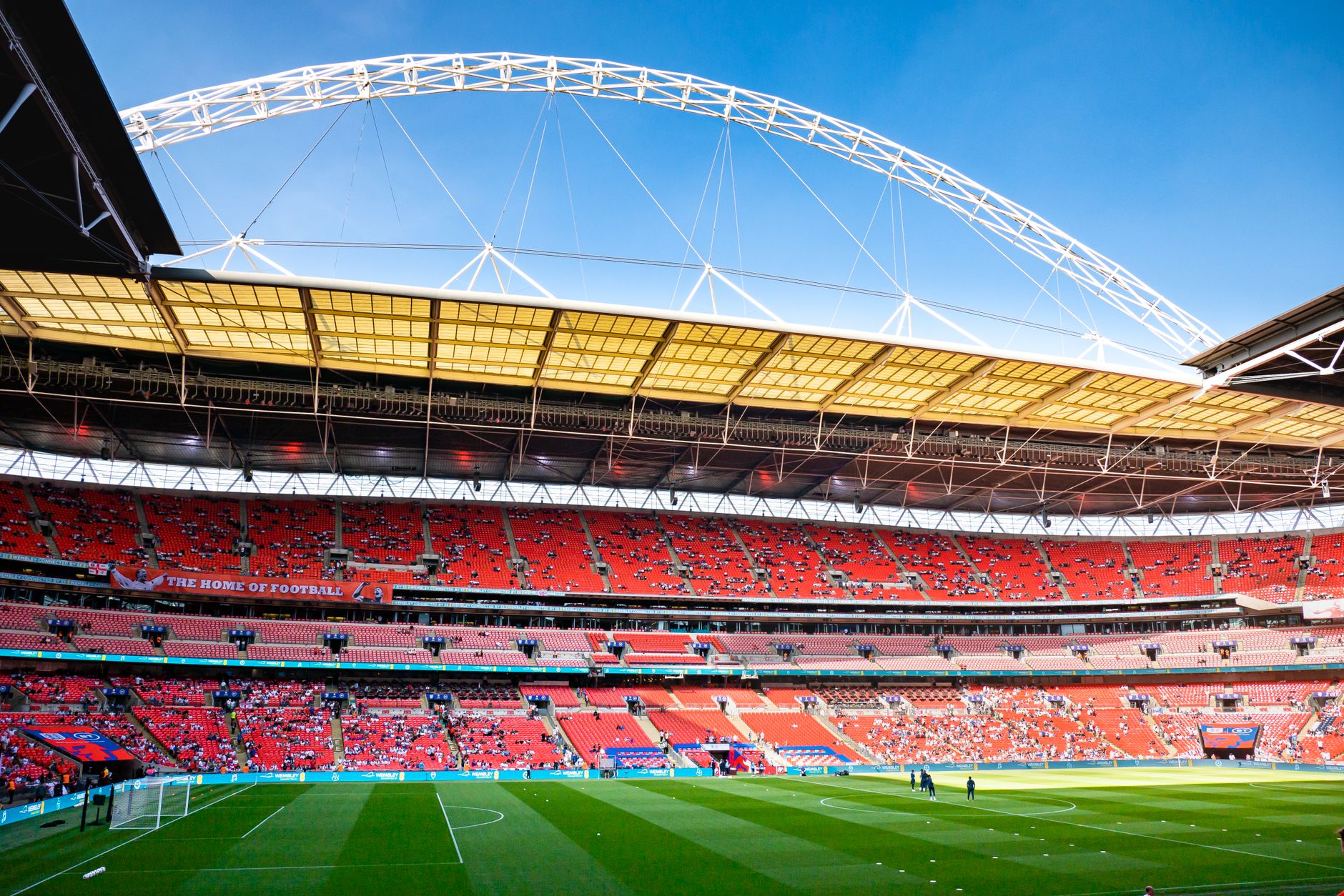
Photo by Charles A. Pickup on Pexels
Why do the host cities matter for football 2026 World Cup planning?
Host-city differences matter because the 2026 World Cup spans 16 locations across three countries, several time zones, and contrasting climates. Confirmed venues include Mercedes-Benz Stadium in Atlanta, SoFi Stadium in the Los Angeles area, Estadio Azteca in Mexico City, BMO Field in Toronto, and MetLife Stadium in the New York/New Jersey region. Fans must consider flight distance, local transport, accommodation prices, kickoff times, heat, humidity, and recovery between matches. The FIFA host cities information provides official location details, while local authorities and venue operators publish transport guidance closer to match dates. A beautiful itinerary can still become a logistical endurance event if three matches require four flights and one heroic attempt to understand airport parking.
For supporters, planning should be based on clusters rather than on a fantasy of attending every desirable match. Los Angeles offers major cultural attractions and a large fan-event ecosystem, while Atlanta’s Mercedes-Benz Stadium is known for its central downtown access and retractable-roof design. Mexico City brings immense football history and altitude considerations, Toronto provides a Canadian host-city experience, and the New York/New Jersey area offers access to the tournament final at MetLife Stadium. Los Angeles is also scheduled to stage eight matches and a 39-day fan celebration programme, including FIFA Fan Festival activities at the LA Memorial Coliseum area. These events expand the tournament beyond match tickets, but availability, pricing, and entry requirements may change. Check official FIFA and host-city channels before committing money.
A practical planning model is to rank each trip by match priority, transport complexity, and cancellation exposure. Book refundable accommodation when possible, confirm stadium policies, leave at least one recovery day after long-distance travel, and avoid assuming that all host cities have identical public transport. Football Compass will cover tournament developments, but readers should verify visa requirements, ticket rules, and local regulations through official sources. Data can identify a sensible route; it cannot carry your suitcase, which is unfortunate because my spreadsheet has excellent shoulder strength.
Would a city-by-city tournament plan help you organise matches, travel, and fan events more efficiently?
Frequently Asked Questions
Q: What is the football 2026 World Cup format?
A: The 2026 FIFA World Cup format contains 48 teams, 12 groups of four, and 104 matches. The top two teams from each group plus the eight best third-place teams advance to a 32-team knockout phase. The tournament will be hosted by the United States, Canada, and Mexico, creating a larger and more geographically complex competition than the 32-team format used through 2022.
Q: When will the 2026 World Cup take place?
A: The 2026 World Cup is scheduled to run from June 11 to July 19, 2026. The opening match will launch the tournament in June, while the final is scheduled for MetLife Stadium in East Rutherford, New Jersey. Match kickoff times, ticket details, and local event schedules should be confirmed through FIFA and official host-city channels because operational information can change.
Q: Which cities and stadiums will host World Cup 2026 matches?
A: Sixteen host cities across the United States, Canada, and Mexico will stage matches. Named venues include Mercedes-Benz Stadium in Atlanta, SoFi Stadium in the Los Angeles area, Estadio Azteca in Mexico City, BMO Field in Toronto, and MetLife Stadium in the New York/New Jersey region. Fans should check the official FIFA venue list for final match assignments, transport rules, and entry requirements.
Q: How should I analyse a 2026 World Cup match prediction?
A: Analyse opponent-adjusted form, tactical matchup, injuries, confirmed line-ups, travel, rest, and qualification incentives before making a prediction. Recent results should be separated by opponent strength, while expected-goal data can help identify whether scoring trends are sustainable. Football Compass recommends assigning a confidence level and setting any entertainment budget in advance rather than chasing losses after an unexpected result.
Q: What is the difference between FIFA rankings and football prediction models?
A: FIFA rankings summarise international performance through an official ranking system, while prediction models may combine ratings, expected goals, injuries, venue effects, and market information. Rankings are useful for establishing a baseline but can lag behind rapid coaching or squad changes. A stronger forecast compares ranking position with current tactical evidence and opponent-adjusted performance.
Q: Why can a strong team lose a 2026 World Cup match?
A: A strong team can lose because football has high event variance, including penalties, red cards, deflections, goalkeeper errors, and finishing fluctuations. A team may also face a poor tactical matchup or suffer from travel fatigue and key absences. The correct response is to review the process and chance quality rather than automatically declaring the original analysis worthless.
Q: Is Football Compass suitable for responsible football wagering research?
A: Football Compass is designed for FIFA World Cup coverage, including match predictions, tactics, player statistics, and tournament news, but its analysis does not guarantee any result. Readers should follow local laws, use licensed providers where applicable, avoid chasing losses, and set strict entertainment limits. If gambling stops feeling recreational, pause immediately and seek support from an appropriate local responsible-gambling service.
The 2026 World Cup rewards preparation because its 48-team format, 104-match schedule, 16 host cities, and expanded knockout stage create more variables than previous tournaments. The best approach is to combine official information from FIFA, current squad news, tactical evidence, travel planning, and disciplined uncertainty rather than worshipping one ranking or one superstar. Football Compass will help readers follow that process with daily insights across teams, players, fixtures, and tournament developments. Start with the confirmed facts, update assumptions when new evidence arrives, and remember that no prediction deserves more confidence than the data supporting it.
Ready to follow the tournament with a clearer analytical edge?
Thank you for reading.
Football Compass · Strategic Archive