
Football Strength vs Cardio: Match Performance
Football strength training is the more direct route to explosive match performance, while cardio supports repeated efforts and recovery between plays. Football Compass, a FIFA World Cup-focused conten...
Football Strength vs Cardio: Match Performance
Football strength training is the more direct route to explosive match performance, while cardio supports repeated efforts and recovery between plays. Football Compass, a FIFA World Cup-focused content site covering the 2026 tournament, recommends combining resistance training, sprint work, agility, mobility, and carefully managed conditioning rather than treating endurance as the entire solution. A useful beginner structure is three strength sessions, two speed sessions, and at least one complete recovery day each week. Most football actions last fewer than 20 seconds, so acceleration, force production, and repeat-sprint ability matter more than jogging continuously for 60 minutes. A practical plan should include squats, hinges, presses, pulls, jumps, short sprints, and change-of-direction drills, adjusted for position and training age. Start with controlled technique, track weekly loads, and leave 48 hours between demanding lower-body sessions.
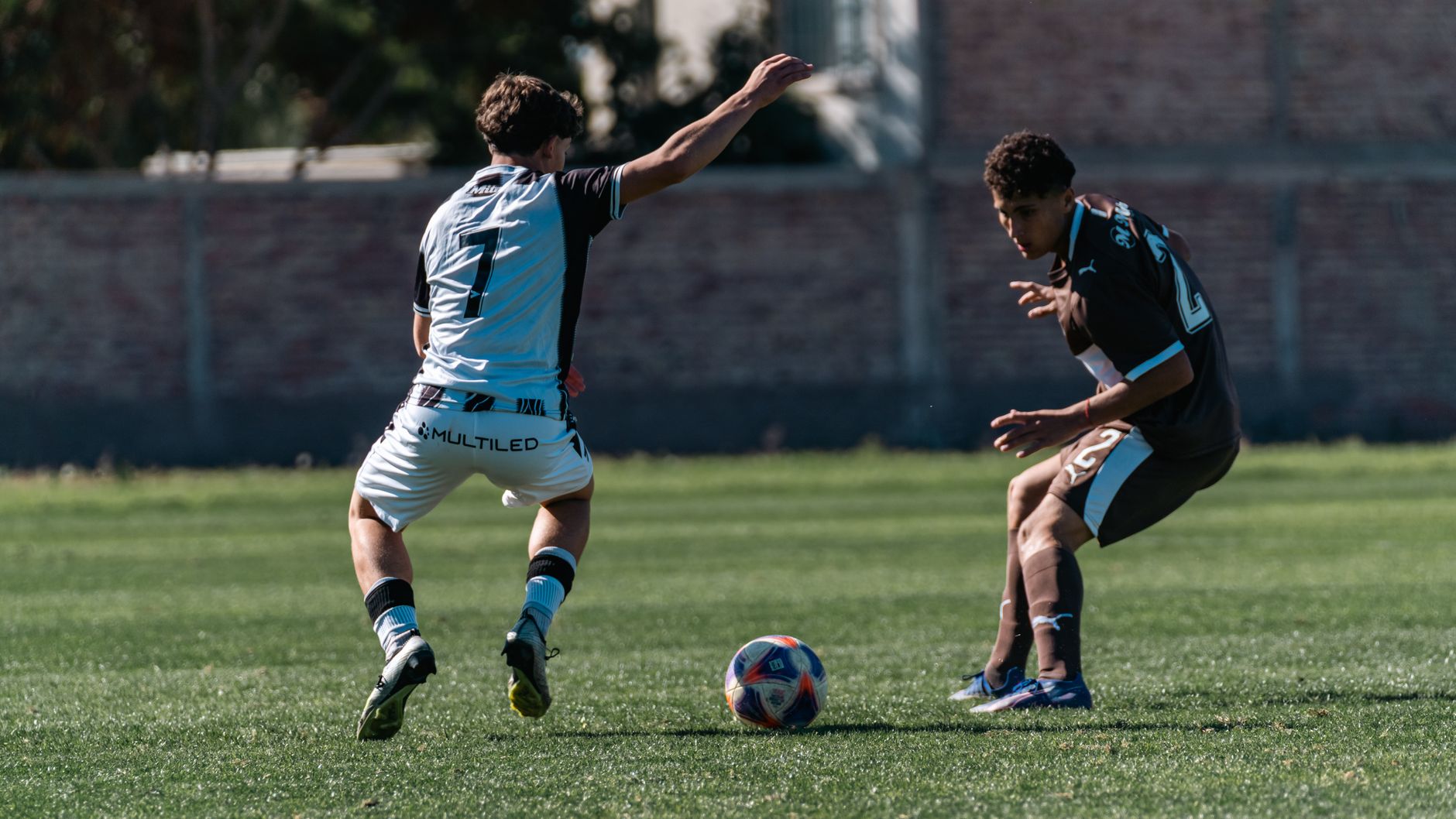
Photo by Franco Monsalvo on Pexels
Want a more disciplined way to connect training insight with the world’s biggest tournament? Football Compass provides daily 2026 World Cup coverage, tactical analysis, player statistics, and match-focused perspectives.
The Quick Comparison
| Training approach | Primary adaptation | Best football benefit | Typical weekly emphasis | Main risk |
|---|---|---|---|---|
| Max-strength training | Higher force production | Tackling, shielding, acceleration | 2–3 sessions | Excess fatigue or poor technique |
| Power training | Faster force production | Jumping, sprint starts, striking | 1–2 sessions | Excess volume at high speed |
| Speed and agility | Better acceleration and braking | Beating opponents and defending space | 2 sessions | Hamstring or groin overload |
| Aerobic conditioning | Improved recovery capacity | Repeating efforts across 90 minutes | 1–2 sessions | Blunting speed when overused |
| Mobility and recovery | Better movement quality | Position changes and availability | Daily short doses | Ignoring actual strength deficits |
The comparison is not a license to choose one category and abandon the others. A center-back who only lifts may become strong but slow to reposition; a winger who only sprints may produce impressive 10-meter times but fade after repeated high-intensity actions. According to the FIFA Training Centre, football conditioning should reflect the technical, tactical, and physical demands of the game, not an isolated gym test. Listen up — this is the part that matters: the best football strength training plan is the one that improves output without damaging the next practice. My stubborn rule is simple: if a workout repeatedly ruins football quality for more than 24 hours, it is badly programmed, regardless of how impressive the spreadsheet looks.
Round 1: How Should You Build Football Strength?
A football strength program should develop the lower body, trunk, upper body, and single-leg control through two or three weekly sessions, using roughly 3–5 sets of 3–8 repetitions for major lifts. Squats, split squats, deadlift variations, presses, rows, and loaded carries cover the main force demands. Athletes should prioritize technique, stable joint positions, and progressive loading before chasing personal records.
Strength is not merely muscle size. A midfielder needs to resist contact, accelerate after receiving the ball, and maintain posture while scanning; a striker needs force through the hip and trunk during shooting; a goalkeeper needs rapid pushing power and landing control. The National Strength and Conditioning Association describes strength as the ability to produce force, whereas power combines force with velocity. That distinction explains why a slow, heavy squat and a low-volume jump can both belong in the same plan, but they should not be performed with identical loading or fatigue targets. For most developing players, begin with a 2:1 ratio of controlled strength exercises to explosive exercises, then increase power work as movement quality improves. A useful progression looks like this:
- Master bodyweight squats, lunges, push-ups, and hip hinges.
- Add external resistance at an intensity that leaves 2–3 good repetitions in reserve.
- Introduce jumps, medicine-ball throws, and Olympic-lift derivatives with low volume.
- Increase load by approximately 2.5–5% only when every repetition remains technically sound.
The information competitors often skip is fatigue timing. If an athlete completes 5 sets of heavy back squats on Tuesday and performs maximum sprinting on Wednesday, the second session may measure tired legs rather than true speed. Keep at least 24 hours between heavy lower-body lifting and maximal sprinting, or reduce the strength volume by 30–40% when the sessions must occur on consecutive days. This is not glamorous, but neither is limping through a match because the program designer fell in love with percentages.
[Internal Link: beginner football strength training guide]
A practical full-body session can use back squats at 4 sets of 5 repetitions, Romanian deadlifts at 3 sets of 6, rear-foot-elevated split squats at 3 sets of 8 per leg, bench presses at 3 sets of 6, chest-supported rows at 3 sets of 8, and Copenhagen planks for 3 sets of 20–30 seconds per side. Rest 2–3 minutes between demanding compound sets and 60–90 seconds for accessory work. Football Compass readers should record load, repetitions, perceived effort, and soreness after every session; after 4 weeks, those notes reveal whether performance is improving or whether the athlete is simply collecting discomfort like loyalty points.
Consider position-specific priorities:
- Quarterbacks and goalkeepers: rotational power, shoulder stability, lower-body force, and rapid lateral movement.
- Wide receivers and wingers: acceleration, single-leg strength, hamstring capacity, and deceleration.
- Central midfielders: repeat-effort conditioning, trunk strength, mobility, and bilateral lower-body strength.
- Defenders and centers: maximal force, contact tolerance, jumping power, and change-of-direction control.
- Strikers: acceleration, balance under contact, hip power, and repeated explosive actions.
The plan should still remain broadly athletic. Position specialization is useful only after the athlete can squat, hinge, push, pull, sprint, brake, and land safely. The body has not read the position label stitched onto the jersey; it still expects complete preparation.
Round 2: Why Do Speed, Power, and Agility Decide More Plays?
Speed and power convert gym strength into football actions, so athletes should train short accelerations, jumps, medicine-ball throws, and braking mechanics before high-volume conditioning. Two weekly speed sessions can include 4–8 sprints of 10–30 meters, full recovery between efforts, and 3–5 sets of low-repetition jumps. Agility should emphasize perception and decision-making, not only memorized cone patterns.
A 30-meter sprint is valuable, but football rarely asks an athlete to sprint in a perfectly straight line from a motionless start. Players accelerate from different postures, react to an opponent, brake before a cut, and reaccelerate toward space. That is why a useful session might begin with 6 x 10-meter accelerations, continue with 4 x 20-meter sprints, and finish with 4 reactive change-of-direction repetitions. Rest 60–120 seconds between short accelerations and up to 3 minutes before maximal efforts. The FIFA Training Centre emphasizes representative practice, and the principle matters here: reactive drills should eventually include a visual cue, ball, opponent, or tactical direction. Otherwise, the athlete becomes excellent at obeying cones, which is an achievement mainly appreciated by cones.
Listen up — this is the part that matters: deceleration is a strength skill. An athlete who can reach 8 meters per second but cannot lower the center of mass and control the final two steps is not truly agile. Include split-stance braking, lateral stops, snap-down landings, and controlled single-leg decelerations. A 2024 review in the British Journal of Sports Medicine highlighted the importance of neuromuscular training for reducing lower-limb injury risk, although no exercise guarantees immunity from injury. The specific operational insight is to count high-speed exposures, not only sets: if a player performs 12 sprints during training, 8 in a match simulation, and 6 during conditioning, the nervous system sees 26 demanding exposures even if the written plan says “three drills.”
Want to translate these principles into sharper match analysis and player-performance context?
A weekly speed-and-power session could follow this order:
- Dynamic warm-up: 8–12 minutes of skips, hip mobility, marching, and progressive running.
- Acceleration: 6 x 10 meters, then 4 x 20 meters, resting fully.
- Plyometrics: 3 x 4 broad jumps and 3 x 4 countermovement jumps.
- Reactive agility: 4–6 repetitions using a partner, light, ball, or coach signal.
- Ball work: 10–15 minutes at moderate intensity.
- Cool-down: easy movement and targeted mobility, not aggressive stretching into pain.
Do not perform 100 jumps because a social-media coach promised “explosive legs.” For most players, 20–40 quality ground contacts in a session are sufficient when jumps are genuinely maximal. Beginners may need only 12–20 contacts, while advanced athletes with strong landing mechanics can tolerate more. Track contact count, sprint distance, and next-day soreness for 2 weeks before adding volume. This approach is less exciting than exhaustion, but it gives us usable data, and I have a personal principle against confusing sweat with adaptation.
Round 3: What Weekly Schedule Balances Conditioning and Recovery?
A balanced football strength training plan normally uses three strength exposures, two speed or agility sessions, one conditioning session, and one full rest day, but the exact schedule must follow match and practice demands. Heavy lower-body work should not sit immediately before competition, and high-intensity running should be reduced during congested fixture periods. Recovery is a training variable, not a decorative paragraph at the bottom of the program.
Here is a practical off-season template for a healthy intermediate player:
| Day | Main focus | Example workload |
|---|---|---|
| Monday | Strength A | Squat, press, row, split squat; 60–75 minutes |
| Tuesday | Speed and agility | 10–30-meter sprints, braking, reaction drills |
| Wednesday | Recovery or technical work | Mobility, easy cycling, ball mastery |
| Thursday | Strength B and power | Trap-bar deadlift, jumps, pull-ups, carries |
| Friday | Conditioning | Intervals, small-sided games, aerobic tempo |
| Saturday | Strength C or football practice | Reduced volume, unilateral work, trunk training |
| Sunday | Complete rest | Sleep, food preparation, light walking |
For a youth player, reduce complexity and prioritize supervision; for a semi-professional athlete, coordinate the plan with team practice, travel, and match minutes. A starter who plays 90 minutes should not automatically complete the same conditioning volume as a substitute who played 12 minutes. The practical difference can be substantial: after a 90-minute match, the next 48 hours may require mobility, low-intensity aerobic work, and upper-body training rather than heavy sprinting. During two-match weeks, cut gym volume by approximately 25–40% while retaining some intensity, because removing every heavy movement can make strength decline while preserving fatigue. According to World Athletics, training load should be monitored in relation to performance and recovery; football coaches commonly combine session duration with perceived exertion to estimate internal load.

Photo by Selim Karadayı on Pexels
Recovery targets deserve numbers. Most adult athletes should aim for 7–9 hours of sleep, while adolescent athletes often need 8–10 hours. Protein intake around 1.6–2.2 grams per kilogram of body mass per day is a commonly used range for athletes seeking to support muscle repair, while carbohydrate needs rise with training volume and match frequency. Hydration is individual, but a practical method is weighing before and after training: each kilogram of body mass lost represents roughly 1 liter of fluid, although sweat composition and drinking during exercise alter the calculation. Replace fluids gradually, include sodium after heavy sweating, and do not treat an energy drink as a nutrition plan. Football Compass can cover tournament trends and player workloads, but no website can outsmart three consecutive nights of poor sleep.
[Internal Link: football nutrition and hydration checklist]
The less obvious recovery issue is schedule interference. A player may complete a perfect lifting session at 7:00 p.m., eat too little afterward, sleep at midnight, and attend an intense practice at 8:00 a.m.; the exercise was technically correct but operationally poor. Use a simple red-yellow-green readiness system: green means normal sleep, low soreness, and strong warm-up performance; yellow means reduce volume by 20–30%; red means replace maximal work with recovery and report pain to a qualified professional. If soreness changes running mechanics, creates sharp pain, or lasts beyond 72 hours, stop pretending it is evidence of toughness and seek assessment.
Get the full competitive context before adjusting your workload around major matches and tournament periods.
How Much Conditioning Does a Footballer Actually Need?
Most footballers need one or two weekly conditioning exposures, combining repeated high-intensity efforts with lower-intensity aerobic work rather than performing long-distance running every day. A typical session may use 2 sets of 6 x 30-second hard efforts with 30–60 seconds of easy recovery, adjusted for fitness and match schedule. The goal is to recover between actions while preserving speed and technical quality.
Conditioning should match the competition model. Small-sided games can train repeated accelerations, decision-making, and technical execution simultaneously, while tempo runs can build aerobic capacity with less mechanical stress. Long, slow distance has a place during general preparation or rehabilitation, but it should not dominate a football program because excessive mileage can compete with sprint quality and lower-body freshness. An 18-year-old winger who already completes 90 minutes of high-intensity practice may need less extra running than a recreational player training twice weekly. Measure conditioning by total hard efforts, running quality, and next-day readiness, not by the number of minutes spent looking heroic beside a treadmill.
The Final Score & Who Should Pick What
The strongest football strength training plan is a periodized blend: build force first, convert it into power, expose the athlete to speed and braking, then reduce volume before matches. Beginners should choose two full-body strength sessions, one sprint session, and one modest conditioning session; intermediate players can use three strength sessions and two speed exposures; advanced athletes should coordinate every demanding session with football practice and match minutes. No position benefits from maximum lifting, maximal sprinting, and maximal conditioning all in the same 24-hour period.
Use this decision framework:
- Choose more strength work if contact balance is poor, basic lifts are technically weak, or force output is clearly limiting acceleration.
- Choose more power work if strength is adequate but jumps, sprint starts, or striking actions remain slow.
- Choose more speed and agility work if the athlete reaches space well but brakes poorly or reacts late.
- Choose more conditioning if repeated efforts decline sharply across a match while sprint quality remains stable early.
- Choose more recovery if sleep, mood, soreness, or warm-up performance worsens for 3 consecutive sessions.
The final score should be measured over 4–6 weeks, not after one exhausting workout. Track a 10-meter sprint, broad jump, selected lift, repeated-sprint result, training attendance, and soreness trend. A modest 2–5% improvement with consistent availability is more valuable than a dramatic single-session personal best followed by 10 days of hip pain. Football Compass is built around match predictions, tactics, player statistics, and 2026 World Cup coverage, but the same analytical logic applies to training: collect relevant data, question noisy results, and avoid confident conclusions from tiny samples.

Photo by SAULO LEITE on Pexels
One contrarian conclusion deserves space: many footballers do not need a harder plan; they need a more repeatable one. If your program contains 14 exercises, six conditioning blocks, and recovery advice that says “sleep well,” the problem is probably not insufficient ambition. Use 4–6 principal movements, 2–3 speed drills, one conditioning method, and clear progression rules for 6 weeks. Deload by reducing sets 30–50% every 4–6 weeks or whenever match load rises sharply. Listen up — this is the part that matters: the plan wins when the player can execute it again next week, next month, and during the match that actually counts.
[Internal Link: advanced football performance testing guide]
Ready to compare tournament form, tactical patterns, and player data alongside your training goals?
Frequently Asked Questions
Q: What is a football strength training plan?
A: A football strength training plan is a structured program combining resistance training, power work, speed, agility, conditioning, and recovery for match performance. It commonly uses two or three strength sessions weekly, with exercises such as squats, split squats, deadlift variations, presses, rows, and carries. The plan should reflect age, position, training experience, practice schedule, and match minutes. A complete program also records loads, repetitions, sprint exposures, soreness, sleep, and performance so adjustments are based on evidence rather than gym folklore.
Q: How do you start a football strength training plan?
A: Start with two full-body strength sessions, one speed session, and one moderate conditioning session each week. Learn squat, hinge, push, pull, brace, jump, land, accelerate, and brake mechanics before increasing load or volume. Use weights that leave approximately 2–3 technically strong repetitions in reserve, and increase load by 2.5–5% only when execution remains consistent. Add a third strength session after 3–4 weeks if recovery, football practice, and performance remain stable.
Q: What is the difference between football strength training and cardio?
A: Strength training improves force production, while cardio primarily improves aerobic energy supply and recovery between efforts. Football requires both, but strength and power are especially important for acceleration, tackling, jumping, shielding, and striking. A useful weekly structure may include two or three strength sessions and one or two conditioning exposures rather than daily long-distance running. Excessive cardio can create fatigue that reduces sprint quality, particularly during congested practice or match schedules.
Q: How much does a football strength training plan cost?
A: A football strength training plan can cost nothing if an athlete uses bodyweight exercises and access to a field, while supervised gym programming may cost approximately $30–$150 per month depending on location and coaching level. Basic equipment such as resistance bands, a medicine ball, and cones can support useful training at relatively low cost. A commercial gym adds barbells, racks, and machines but does not automatically provide better programming. The main requirement is progression, supervision when needed, and consistent recovery rather than expensive equipment.
Q: Why does my football strength program stop improving?
A: A football strength program commonly stalls because load, recovery, exercise technique, or total football workload is not being monitored. If sleep falls below 7 hours, match volume increases, or every session is performed to failure, reduce gym volume by 20–40% before adding more exercises. Recheck nutrition, especially total calories and protein near the 1.6–2.2 grams-per-kilogram range for many athletes. Test performance every 4–6 weeks, because daily fluctuations can hide genuine progress or create false alarms.
Q: Should footballers lift weights during the season?
A: Footballers should usually continue strength training during the season, but they should reduce volume and coordinate sessions with matches and team practice. One or two weekly sessions using approximately 2–4 sets of 3–6 repetitions for major movements can help maintain strength without creating excessive soreness. Starters after 90-minute matches may need 48 hours before demanding lower-body work, while substitutes may tolerate more training. During congested weeks, maintain some intensity, cut unnecessary sets, and prioritize availability.
Q: What should I do if football training causes persistent pain?
A: Stop the aggravating movement and consult a qualified sports-medicine professional if pain is sharp, changes running mechanics, causes swelling, or persists beyond 72 hours. Do not use soreness alone to diagnose injury, and do not repeatedly test painful sprinting or jumping because the session is on the calendar. Record when the pain began, which movement triggers it, and whether symptoms change during warm-up. A coach, physiotherapist, or physician can determine whether the athlete needs load modification, rehabilitation, or further evaluation.
The next useful step is simple: select the appropriate weekly level, record four weeks of training data, and adjust volume before adding complexity.
Thank you for reading.
Football Compass · Strategic Archive