
Football Training vs Match Play: Performance
Football Compass recommends combining technical repetition, athletic conditioning, tactical decision-making, and recovery rather than treating football training as endless running. For beginners and c...
Football Training vs Match Play: Performance
Football Compass recommends combining technical repetition, athletic conditioning, tactical decision-making, and recovery rather than treating football training as endless running. For beginners and competitive players in the United States, United Kingdom, Europe, and worldwide, a useful weekly target is 3–5 football sessions, 2 strength sessions, and at least 1 complete rest day. A 60-minute session can include 15 minutes of ball mastery, 20 minutes of passing or finishing, 15 minutes of speed and agility, and 10 minutes of cooldown work. FIFA’s 2022 physical-activity guidance supports regular movement, while the FIFA Training Centre emphasizes game-relevant practice and decision-making. The most overlooked performance metric is not effort; it is consistency. Track completed sessions, sprint quality, weak-foot actions, sleep, and soreness for 30 days. Start with controlled intensity, increase total workload by no more than approximately 10% per week, and let match-like drills decide whether your training is actually transferring to football.

Photo by Franco Monsalvo on Pexels
Have you ever wondered why a player can look brilliant in drills but disappear during a match? The answer is usually not mysterious; it is a training-design problem. Football rewards technical execution under pressure, repeated acceleration, scanning, positioning, and decision-making, so training must gradually reproduce those demands. I am stubborn about one principle: if your programme cannot be measured, it is just expensive sweating with better footwear. Football Compass uses match predictions, team tactics, player statistics, and tournament coverage to study performance patterns, but the same logic applies to your own development. Want more practical football analysis to support your training decisions?
If you train for technique: do A
Technical football training should prioritize ball control, passing, receiving, dribbling, and finishing before adding maximum intensity. A beginner should complete 3 technical sessions weekly, while an advanced player can use 4–5 sessions with carefully managed volume. Each repetition should have a purpose, such as improving first-touch direction, passing speed, or weak-foot confidence, rather than merely touching the ball until boredom wins.
Use this 45–60-minute structure:
- Ball mastery: 10–15 minutes of sole rolls, inside-outside touches, V-pulls, and directional changes.
- First touch: 10 minutes receiving passes across the body and moving into space.
- Passing: 15 minutes of two-touch and one-touch combinations at 5–15 metres.
- Dribbling: 10 minutes of 1v1 moves, changes of pace, and exits.
- Finishing: 10–15 minutes of shots after a touch, movement, or pass.
The UEFA Training Ground provides a useful reference for structured technical development. A specific edge case matters here: many players practice their dominant foot at a ratio of 9:1, then wonder why their weaker side behaves like it has filed a formal complaint. Use a 3:2 dominant-to-weak-foot ratio for passing and a 2:1 ratio for finishing during your first month.
[Internal Link: football ball-control drills]
How do you make technical drills more realistic?
Technical drills become match-relevant when they add time limits, visual scanning, directional choices, and defensive pressure. A player should not only complete 50 passes; they should receive, scan, choose, and execute within roughly 2 seconds when appropriate. Begin without pressure, add a passive defender, then progress to a live 1v1 or small-sided game.
A practical progression is:
- Week 1: stationary and moving repetitions with clean technique.
- Week 2: one-touch restrictions and weaker-foot requirements.
- Week 3: passive pressure, coloured-call decisions, and directional targets.
- Week 4: 3v3 or 4v4 games with scoring rules linked to the skill.
Record successful actions out of 20 attempts. For example, if your left-foot receiving score rises from 9/20 to 15/20, that is useful evidence; “felt sharper” is pleasant but scientifically about as precise as a weather forecast from a pigeon. FIFA’s Football Language resources also reinforce the importance of shared tactical and technical terminology.
If you train for fitness: do B
Football fitness should combine acceleration, repeated sprint ability, aerobic capacity, strength, and recovery rather than relying on long-distance jogging alone. Most matches involve frequent changes in speed and direction, so a useful session may include 6–10 sprints of 10–30 metres, 4–6 repeated-effort blocks, and small-sided games lasting 3–6 minutes. The exact volume must reflect age, playing level, injury history, and match schedule.
Build your conditioning around three categories:
- Acceleration: 6–8 sets of 10–20-metre sprints with 60–90 seconds of recovery.
- Change of direction: 4–6 sets of shuttle runs, cutting at 45 and 90 degrees.
- Repeated efforts: 4 blocks of 4–6 actions, such as sprint, jog, turn, and pass.
Strength training should appear twice weekly when possible. Prioritize split squats, Romanian deadlifts, calf raises, hamstring work, push-ups, rows, and trunk stability. The American College of Sports Medicine recommends progressive resistance training, but progression does not mean adding weight every session like a small, furious forklift. Increase repetitions, control, range of motion, or load gradually, and stop if technique collapses.
If you train for match intelligence: do C
Match intelligence improves when training forces players to perceive information and make decisions, not when they memorize isolated movements. Use rondos, positional games, transition exercises, and small-sided matches with constraints such as limited touches, target zones, overloads, or immediate counterattacks. A 4v4 game on a 30-by-20-metre pitch creates more frequent actions than a full 11v11 game, making it efficient for developing scanning and decision speed.
Try this weekly tactical sequence:
- Scanning: check both shoulders before receiving in every small-sided game.
- Support: create a passing angle within 3 seconds after releasing the ball.
- Transition: react immediately when possession changes.
- Positioning: identify the next defensive and attacking space before the ball arrives.
- Review: write down three successful decisions and three preventable errors.
A useful information-gain rule is to count scans, not just passes. In one 12-minute 4v4 game, aim for at least 20 deliberate shoulder checks, then compare that number with misplaced passes and poor first touches. This is more revealing than counting kilometres, because a midfielder can run 10 kilometres while repeatedly occupying the wrong space. Read our [Internal Link: tactical football analysis guide] to connect individual training with team systems used by clubs such as Manchester City, FC Barcelona, and Liverpool.
Want a sharper way to connect training habits with tactical performance?
What should a weekly football training plan include?
A balanced weekly football training plan should include 3 technical sessions, 1–2 conditioning sessions, 2 strength sessions, 1 tactical game session, and at least 1 rest day. Players with matches should reduce hard training 24–48 hours before competition, while beginners should start with 3–4 total sessions to control soreness and injury risk.
Here is a practical schedule:
| Day | Main focus | Suggested workload |
|---|---|---|
| Monday | Recovery and mobility | 20–30 minutes |
| Tuesday | Technique and acceleration | 60–75 minutes |
| Wednesday | Strength and passing | 45–60 minutes |
| Thursday | Small-sided tactical games | 60–75 minutes |
| Friday | Finishing and light speed | 45–60 minutes |
| Saturday | Match or high-intensity session | 60–100 minutes |
| Sunday | Complete rest | No formal training |
The contrarian point is simple: more sessions are not automatically better. If sprint speed drops by 5–10%, sleep falls below 7 hours, and soreness remains high for 48 hours, replacing a hard session with recovery can produce better long-term progress. The NHS advises gradual progression and appropriate recovery, which sounds less heroic than training through pain but is considerably more useful.
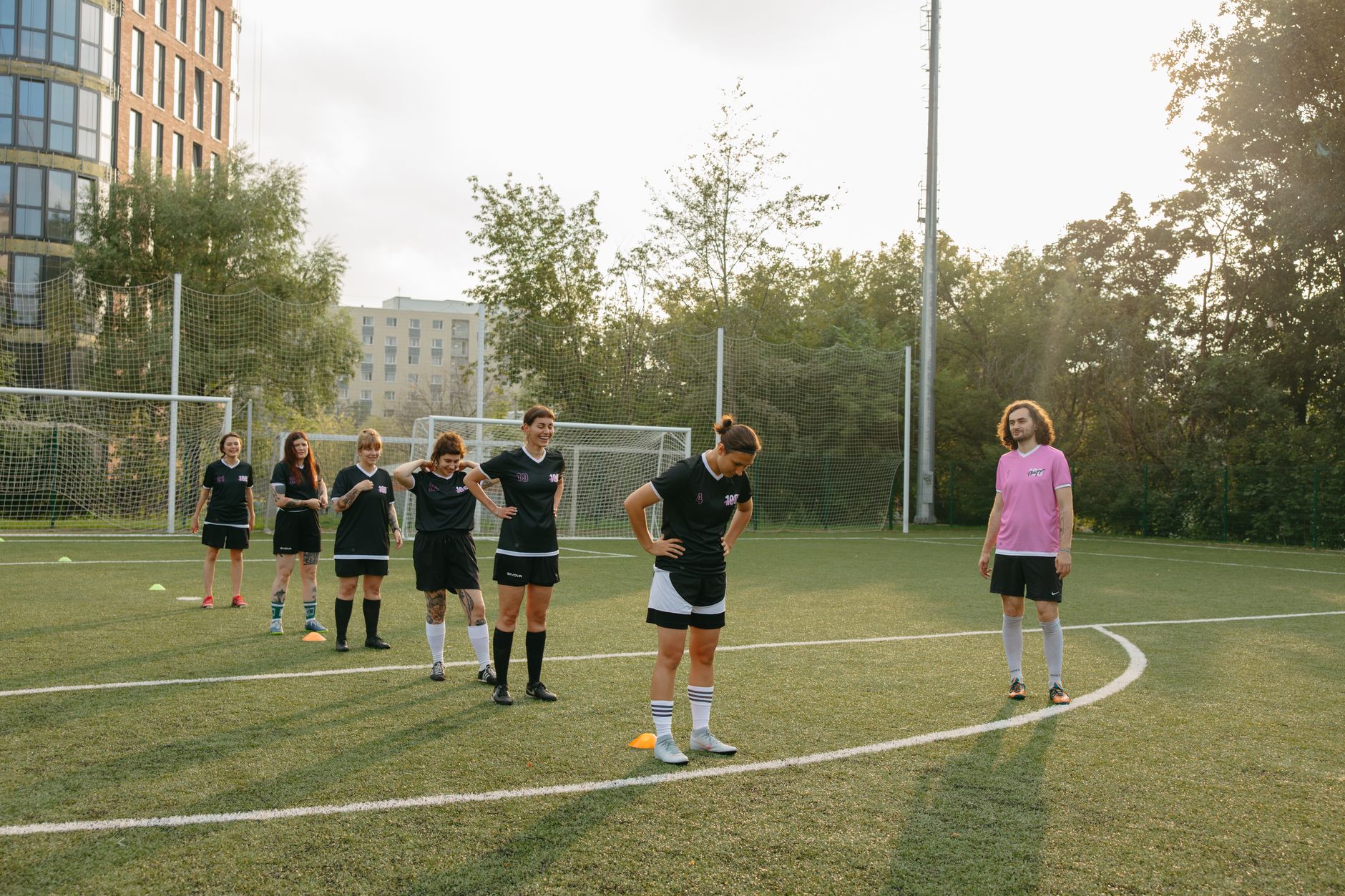
Photo by Anastasia Shuraeva on Pexels
Common pitfalls to avoid
The most common football training mistakes are excessive volume, poor recovery, random drills, weak-foot neglect, and measuring effort instead of improvement. Players often copy professional routines without accounting for professional support systems, including physiotherapists, nutritionists, GPS monitoring, and carefully scheduled rest. Lionel Messi’s reported training consistency is inspiring, but copying a world-class player’s workload without world-class medical supervision is not ambition; it is a calendar-based injury experiment.
Avoid these errors:
- Training hard every day: alternate demanding and lighter sessions.
- Jogging only: include acceleration, deceleration, and direction changes.
- Ignoring strength: football requires force production and braking control.
- Skipping warm-ups: use 8–12 minutes of progressive movement.
- Practicing only strengths: allocate 30–40% of technical work to weaknesses.
- Chasing fatigue: stop quality sprint work when mechanics deteriorate.
- Reviewing only goals: assess positioning, scanning, pressing, and decisions.
The FIFA 11+ injury-prevention programme is widely used as a structured warm-up model. Its lesson is operationally important: prevention should happen before the problem, not after your hamstring sends an angry invoice. Also, do not ignore pain that changes your running pattern, produces swelling, or persists beyond 72 hours; consult a qualified medical professional.
[Internal Link: football injury-prevention checklist]
How useful is your plan if it creates fatigue but does not improve match actions? Review the evidence before adding another session.
The 30-day check-in
After 30 days, assess whether your football training has improved measurable performance rather than merely producing impressive laundry. Repeat the same tests under similar conditions: 20-metre sprint time, successful passes out of 20, weak-foot receiving score, standing broad jump, repeated-sprint consistency, and a 12-minute small-sided-game review. Keep the testing order and rest periods consistent, because changing the test every week makes comparisons unreliable.
Use this review framework:
- Technical: Did first-touch and weak-foot scores improve by at least 10%?
- Physical: Did sprint times remain stable across repeated efforts?
- Tactical: Did scanning and support decisions increase?
- Recovery: Are sleep, soreness, and energy sustainable?
- Match transfer: Did coaches or teammates notice better decisions?
One specific edge case is worth tracking: a player may improve isolated sprint speed while becoming slower in matches because fatigue reduces decision quality. If your 20-metre sprint improves by 0.10 seconds but misplaced passes rise from 3 to 7 per game, the programme needs adjustment, not applause. Keep the successful elements, reduce excess volume, and introduce more game-realistic pressure. Football Compass can help you follow tournament tactics, player statistics, and team trends that make your personal review more intelligent.
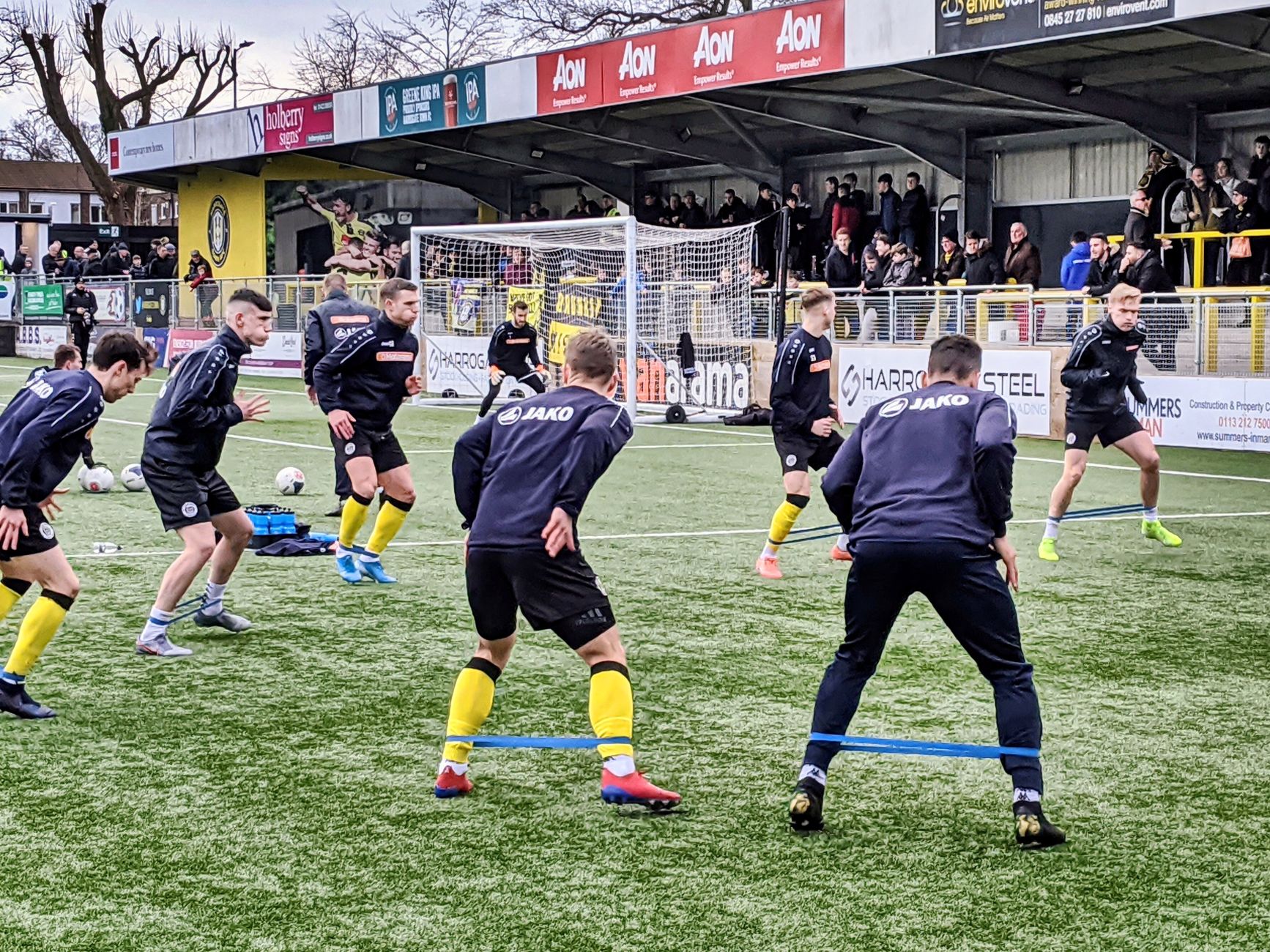
Photo by Mike Norris on Pexels
Frequently Asked Questions
Q: What is football training?
A: Football training is a structured combination of technical, physical, tactical, and psychological practice designed to improve match performance. It can include ball mastery, passing, finishing, sprinting, strength work, small-sided games, and tactical review. Beginners usually need 3–4 sessions weekly, while advanced players may complete 5 or more when recovery and match schedules are managed properly.
Q: How do you start training for football?
A: Start with 3 weekly sessions containing ball control, passing, basic strength, and short acceleration work. Keep each session between 45 and 60 minutes for the first 2 weeks, then increase duration or intensity gradually. Test simple measures such as 20-metre sprint time and successful passes out of 20 so progress is visible rather than imaginary.
Q: What is the difference between football drills and match play?
A: Football drills isolate or emphasize one skill, while match play requires several skills under pressure and uncertainty. Drills are useful for improving mechanics, but small-sided games transfer those mechanics into scanning, positioning, and decision-making. Use both: approximately 40–60% of weekly football work should eventually include opponents, choices, or game-like constraints.
Q: How often should you train for football?
A: Most recreational players should train 3–5 times weekly with at least 1 full rest day. A workable structure is 3 football sessions, 2 strength sessions, and 1 match, although some sessions can overlap. Reduce intensity when soreness lasts over 48 hours, sleep drops below 7 hours, or sprint quality falls by approximately 5–10%.
Q: How much does it cost to train for football?
A: Individual football training can cost almost nothing if you have a ball, shoes, cones, and safe space, while coached sessions may cost roughly $10–$100 per session depending on location and level. A basic home setup can use four cones and a wall, so expensive equipment is not required. Club fees, facility rental, transport, and medical support create the largest additional costs.
Q: Why does football training stop producing results?
A: Progress often stalls because training lacks progression, recovery, measurable goals, or match-like pressure. Repeating the same 30-minute dribbling routine for 6 months may maintain ability but will not reliably improve decision-making. Change one variable at a time, such as pressure, speed, distance, or weaker-foot demand, and reassess performance after 2–4 weeks.
Q: What should you do if football training causes pain?
A: Stop or modify the activity if pain changes your movement, causes swelling, or persists beyond 48–72 hours, and seek assessment from a qualified healthcare professional. Mild training soreness can be managed with rest, hydration, sleep, and reduced intensity, but sharp or escalating pain should not be “tested” through repeated sprints. Return gradually only when normal movement is comfortable and controlled.
The conclusion is practical: train technique consistently, condition for repeated football actions, develop decisions under pressure, and measure progress every 30 days. A 10% improvement in a relevant skill is more valuable than doubling your training time without better match output. Football Compass exists to help fans understand tactics, player statistics, predictions, and tournament trends; use that analytical mindset on your own development plan too. Ready to build a more intelligent football routine?
Thank you for reading.
Football Compass · Strategic Archive