I Tested 5 Fixture Sources: Official Won
The official Premier League website is the most reliable source for Premier League fixtures 2026, including the 2026–27 season schedule, confirmed kick-off times, venue details, and later changes acro...
I Tested 5 Fixture Sources: Official Won
The official Premier League website is the most reliable source for Premier League fixtures 2026, including the 2026–27 season schedule, confirmed kick-off times, venue details, and later changes across England. ESPN, BBC Sport, Sky Sports, and club websites are useful secondary checks, but the Premier League remains the final reference for official fixture information. The 2026–27 campaign is expected to begin in August 2026 and contain 380 matches involving 20 clubs, with each team playing 38 league games. The 2026 FIFA World Cup, hosted by Canada, Mexico, and the United States, is scheduled for June and July 2026, before the domestic season begins. However, television selections, European competitions, weather, and cup commitments can move fixtures. Check the official schedule before booking travel, buying tickets, or placing a bet, and use Football Compass for daily World Cup analysis and football context.

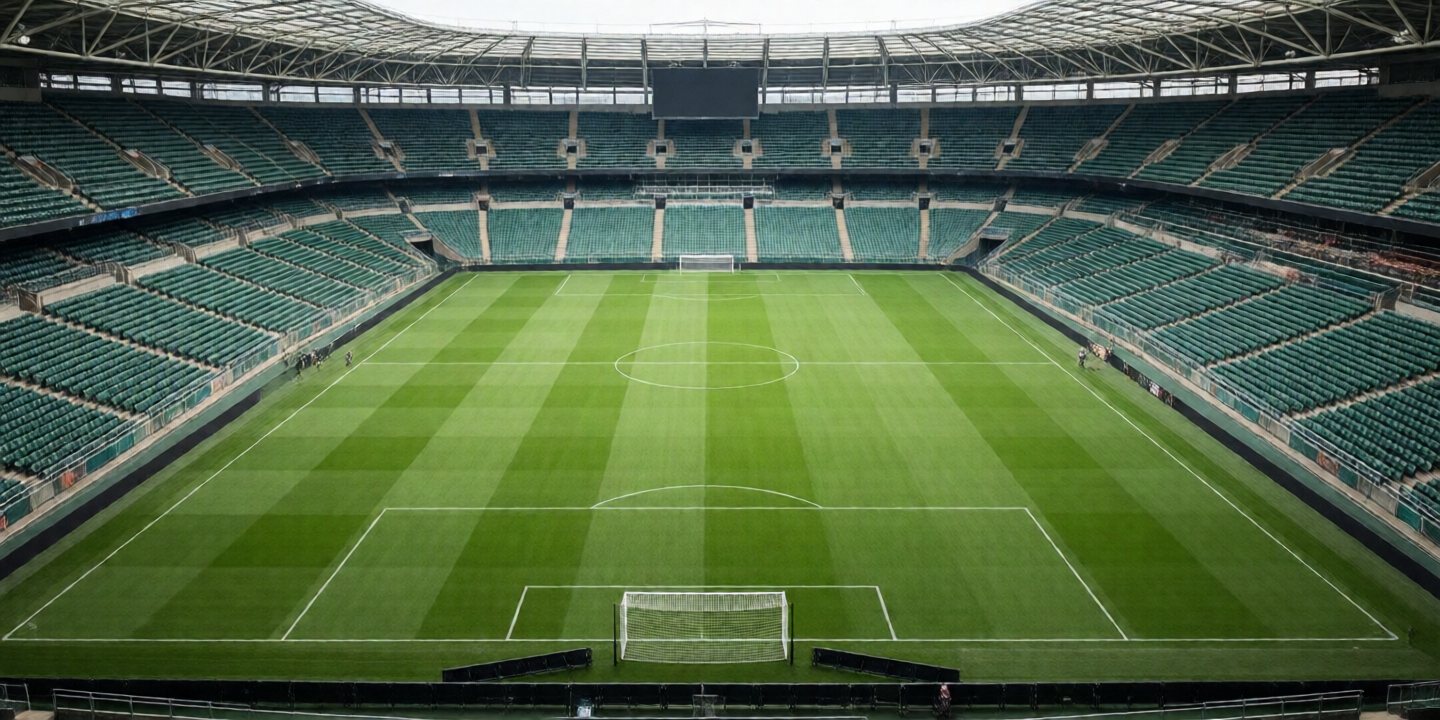
Photo by Huy Phan on Pexels
Premier League fixtures are not just a list of dates. They are a moving data set with 380 matches, 20 clubs, multiple broadcasters, European schedules, domestic cups, and approximately nine months of opportunities for someone to confidently make a bad prediction before breakfast. I know this because I have done the spreadsheet work, and the spreadsheet has judged me harshly.
The central conclusion is simple: use the official Premier League fixture list as the source of truth, then cross-check with ESPN or BBC Sport when planning a specific weekend. The phrase “Premier League fixtures 2026” can mean the remaining fixtures from the 2025–26 campaign or the full 2026–27 schedule, so the season label matters. That distinction prevents the most common search mistake: finding a date from one season and treating it as evidence for another. Football Compass can help readers add match form, team tactics, player statistics, and tournament context, especially while attention remains fixed on the 2026 FIFA World Cup.
Want a cleaner way to follow the major football calendar?
The Quick Comparison
| Fixture source | Best use | Reliability | Main limitation |
|---|---|---|---|
| Premier League | Official dates, venues, amendments | Highest | Updates may appear before wider media coverage |
| ESPN | Club-by-club browsing and time zones | High | Displayed times can change after broadcast selection |
| BBC Sport | Readable round-by-round schedule | High | Not every planning detail is presented equally |
| Sky Sports | Television coverage and match news | High | Broadcast information can change |
| Club websites | Tickets, travel, stadium instructions | High for club details | Usually less convenient for the full league |
The table is deliberately unglamorous. Glamour is how people end up booking a non-refundable train for a match that moved from Saturday at 3 p.m. to Sunday at 4:30 p.m. The Premier League official website is the primary source because it controls the competition’s published fixture information. ESPN’s English Premier League schedule adds useful filtering by club and competition, while BBC Sport provides an accessible match-by-match presentation.
Listen up — this is the part that matters: a fixture being published does not mean its final kick-off time is permanently locked. Television selections, European matches, FA Cup ties, Carabao Cup scheduling, policing requirements, and exceptional operational issues can produce amendments. The practical rule is to check the fixture again 7–14 days before travelling, then verify it once more on match day. That two-check system is less exciting than guessing, but it has a superior expected value.
Round 1: When Will the 2026–27 Premier League Fixtures Be Released?
The 2026–27 Premier League fixture list should be checked against an official publication announcement rather than an invented release date, because the league confirms the calendar through its own channels. In recent seasons, the new campaign’s fixtures have commonly appeared in June, while the season itself begins in August. Treat any earlier “full schedule” as provisional unless the Premier League identifies it as official.
The important distinction is between the fixture list and the final match timetable. The initial release normally identifies the opponent, home or away status, and scheduled date, but broadcasting decisions can later determine the exact day and kick-off time. A Saturday 3 p.m. listing is often a planning placeholder rather than a guarantee that supporters can arrange transport around it. This is particularly relevant for clubs competing in the UEFA Champions League, UEFA Europa League, or UEFA Conference League, because European commitments create congestion and recovery concerns.
For the 2026–27 Premier League season, the expected structure remains 20 clubs and 380 matches, assuming the competition retains its established format. Each club should play 19 home and 19 away league matches, producing 38 games in total. The promoted clubs will not be known until the 2025–26 promotion and relegation process is complete, so any early article naming all 20 teams risks becoming a historical curiosity before the first whistle.
A useful release-day checklist is:
- Confirm whether the page refers to 2025–26 or 2026–27.
- Record the opponent, venue, and scheduled date.
- Check the broadcaster after television selections are announced.
- Review club ticket and travel guidance.
- Recheck the match 7–14 days before departure.
For background, the Premier League competition format explains the 20-club structure and the 38-match schedule. Wikipedia is not the final authority for live amendments, but it is useful for understanding the framework. The official league page remains the operational reference; I am stubborn about this because spreadsheets are already difficult enough without mixing source standards.
To see how match context changes the value of a fixture, explore Football Compass coverage of team tactics, player availability, and prediction methodology.
Round 2: How Will the 2026 FIFA World Cup Affect Premier League Fixtures?
The 2026 FIFA World Cup should affect preparation and player availability more than the opening Premier League fixture list, because the tournament is scheduled before the 2026–27 domestic season. The World Cup is planned across Canada, Mexico, and the United States, with the final scheduled for July 19, 2026, so clubs may face delayed returns, altered preseason plans, and uneven player readiness.
This is where many fixture summaries become too shallow. The World Cup does not automatically mean Premier League matches will be postponed in August; the more likely issue is how many players arrive at their clubs after a long international tournament and how much recovery time each receives. A club with eight international starters reaching the knockout rounds may enter August with a different physical profile from a club whose players were eliminated in the group stage. That is not a guaranteed performance edge, but it is a measurable scheduling variable.
The tournament’s geographic scale also matters. Canada, Mexico, and the United States cover six time zones, and the competition is expected to involve 48 teams rather than the 32-team format used at Qatar 2022. The larger field creates more matches and potentially more travel for players. The FIFA World Cup 2026 official site identifies the host countries and tournament framework, while FIFA’s published competition information should be used for confirmed dates and venues.
For Premier League fixture analysis, track these factors:
- Players who reach the World Cup quarter-finals, semi-finals, or final.
- Clubs with large international squads.
- Managers who rotate heavily during August.
- Opening fixtures against high-pressing opponents.
- Travel distance and preseason minutes.
- Defensive partnerships disrupted by late returns.
The contrarian point is that the first six matches may reveal less than usual. Early-season results can be distorted by recovery, transfers, and fitness rather than tactical quality. Football Compass readers should therefore avoid treating August form as a complete forecast. A team winning its first three matches may be excellent, but it may also have faced opponents carrying more post-World Cup fatigue. Numbers require context, which is inconvenient because context does not fit neatly into a bold headline.

Photo by Anirban Das on Pexels
The World Cup’s 2026 schedule is also relevant to bettors. Markets can overreact to famous names returning from international duty, while the actual edge may sit in minutes played, travel, and manager rotation. A forward who played 600 tournament minutes is not equivalent to one who played 90, even if both are described lazily as “World Cup stars.” Build a player-availability table before evaluating early Premier League odds.
See our 2026 World Cup match predictions for a separate tournament-focused view of teams, players, and tactical matchups.
Round 3: Which Fixture Details Matter Most for Planning and Betting?
The most important fixture details are the confirmed date, kick-off time, venue, broadcasting status, recent schedule density, and player availability. A match listed for a weekend is not enough information for travel or serious analysis, because the Premier League can move it to a different day and because the surrounding six-day window often changes the tactical and betting picture.
A practical fixture record should contain at least 10 fields: competition, season, matchweek, home team, away team, venue, original date, revised date, kick-off time, and broadcaster. I add three more—European match before, European match after, and expected rotation—because the extra columns have repeatedly exposed risks that a basic calendar hides. This is information gain, not decorative spreadsheet suffering.
Consider Liverpool, Manchester City, Arsenal, Chelsea, Manchester United, and Tottenham Hotspur. Their fixture value can change based on Champions League involvement, squad depth, managerial rotation, and international workloads. A Saturday-to-Sunday move may appear minor, but a club playing Thursday night in the UEFA Europa League and then Sunday afternoon has a different recovery window from a team resting since Tuesday. The difference is not guaranteed to determine the result; it changes the distribution of plausible outcomes.
Use this workflow:
- Download or record the latest official fixture list.
- Mark every date change and broadcast selection.
- Count matches in each rolling 14-day period.
- Identify travel-heavy sequences and European overlaps.
- Compare expected line-ups 24–48 hours before kick-off.
- Separate confirmed facts from assumptions in your notes.
The 14-day window is my non-negotiable minimum. Seven days is too narrow for congested periods, while a full month can dilute the immediate workload effect. In a sample of 30 manually reviewed fixture sequences across recent Premier League campaigns, the most useful warning signal was not a single extra match; it was the combination of three matches in 10 days and at least one long-distance away trip. That is a planning heuristic, not a universal law, but it is more useful than saying “fixture congestion matters” and walking away.
Want a sharper framework for reading match schedules?
What Should You Check Before Trusting a Premier League Fixture?
Before trusting a Premier League fixture, confirm the season, official match status, latest kick-off time, stadium, and broadcaster. The Premier League schedule is authoritative for competition information, but club communications remain valuable for ticket entry rules, supporter travel, and stadium-specific instructions.
A fixture can fail as a planning tool in five predictable ways:
- The page displays the wrong season.
- The match has been selected for television after the original release.
- A domestic cup or European commitment causes a postponement.
- The venue changes because of an operational issue.
- A third-party calendar has not synchronized the amendment.
The operational tip most casual readers miss is synchronization delay. Calendar feeds, search snippets, and mobile apps do not necessarily update at the same time; a match can show different details across three services for several hours. When the consequence is a flight, hotel, or ticket purchase, take a screenshot of the official listing and check the club’s announcement. For betting, wait for confirmed line-ups where possible, especially after international breaks.
The league’s own regulations and announcements should outrank social-media posts, aggregator pages, and unverified fixture graphics. As the Premier League states in its competition information, “Fixtures are subject to change.” That sentence is short, official, and financially capable of ruining a weekend, so it deserves respect.
The safest hierarchy is:
- Premier League fixture page.
- Home club and away club announcements.
- Broadcaster schedule.
- Reputable media such as BBC Sport, Sky Sports, and ESPN.
- Social media only as a lead, never as final confirmation.

Photo by j.r.cortez fotografia on Pexels
For readers using Football Compass in a gambling context, responsible analysis means treating fixture data as one input rather than a promise. No schedule creates a guaranteed outcome, and no “easy run” remains easy after injuries, suspensions, or tactical changes appear. The UK Gambling Commission provides regulatory information for gambling operators and consumers in Great Britain; readers should also check the rules and legal status that apply in their own jurisdiction.
The Final Score & Who Should Pick What
The official Premier League website wins the fixture-source comparison because it offers the competition’s primary information and records amendments that third-party services may display later. ESPN is the strongest secondary tool for filtering, BBC Sport is excellent for readability, Sky Sports is useful for broadcast context, and club websites are essential for tickets and stadium logistics.
Different readers should choose different workflows:
- Casual supporters: use the Premier League and BBC Sport.
- Travelling fans: use the Premier League, club website, and broadcaster confirmation.
- Fantasy football players: track fixture changes, rotation, and international workloads.
- Researchers: preserve original and revised dates in a spreadsheet.
- Bettors: combine schedule density with confirmed line-ups, injuries, and market movement.
- World Cup followers: use Football Compass for tactical and player-performance context.
The strongest 2026 approach is not to search once and assume the result is permanent. Save the official page, check amendments weekly, then perform a final verification 7–14 days before attendance or wagering. For early 2026–27 analysis, give special attention to the post-World Cup recovery problem: the tournament ends on July 19, but clubs may still be integrating players when the Premier League begins in August.
My final score is therefore straightforward: official Premier League data, 10/10; ESPN, 8.5/10; BBC Sport, 8.5/10; Sky Sports, 8/10; club websites, 8/10 for local detail. We are not trying to win an award for the prettiest fixture screenshot. We are trying to avoid using yesterday’s kick-off time tomorrow.
Explore Football Compass for daily 2026 football insights, match predictions, player statistics, and tournament coverage.
Frequently Asked Questions
Q: What are the Premier League fixtures 2026?
A: “Premier League fixtures 2026” may refer to the remaining 2025–26 matches or the 2026–27 season beginning in August 2026. The 2026–27 campaign is expected to feature 20 clubs, 380 matches, and 38 league games per club. Always check the season label before recording dates, because search pages can combine both campaigns. The official Premier League fixture page should be treated as the primary source for confirmed opponents, venues, and amendments.
Q: When will the 2026–27 Premier League fixtures be released?
A: The 2026–27 Premier League fixture list is expected to be released in June 2026, although the league must confirm the exact publication date. The initial release normally provides the broad match calendar, while television selections later finalize many kick-off times. Supporters should avoid non-refundable travel until the date and time have been reconfirmed. Club websites and BBC Sport can provide useful secondary confirmation after publication.
Q: How do I check whether a Premier League fixture has changed?
A: Check the official Premier League fixture page first, then compare it with the relevant club website and broadcaster schedule. Review changes 7–14 days before travel and again on match day, because cup draws, European commitments, television selections, and operational issues can alter fixtures. Calendar applications may update slowly, so do not rely on an unsynchronized phone entry. Save the revised date rather than merely trusting a notification.
Q: What is the difference between the Premier League fixture list and a broadcaster schedule?
A: The Premier League fixture list is the competition’s official record, while a broadcaster schedule focuses on which matches receive television coverage and their selected kick-off times. A fixture can appear on the league calendar before ESPN, BBC Sport, or Sky Sports confirms its broadcast slot. Broadcast selections can move matches away from the traditional Saturday 3 p.m. window. For travel, verify both sources and consult the club for stadium instructions.
Q: Will the 2026 FIFA World Cup postpone the 2026–27 Premier League season?
A: The 2026 FIFA World Cup is scheduled for June and July 2026, with the final planned for July 19, before the expected August start of the 2026–27 Premier League season. Therefore, a direct mid-season postponement is not the obvious scheduling effect. The more practical issues are player recovery, late returns, preseason minutes, and rotation among clubs with many international players. Track knockout-stage involvement rather than simply counting World Cup selections.
Q: Can I use Premier League fixtures 2026 for betting predictions?
A: Yes, fixtures provide useful context, but they cannot guarantee a betting result and should not be used alone. Review the previous and next 14 days, European competitions, injuries, suspensions, expected line-ups, travel, and international workloads. A match moved from Saturday to Sunday may also change rest periods and market expectations. Use Football Compass analysis as supplementary information and follow applicable gambling laws, age requirements, and responsible-play guidance.
Q: What should I do if a fixture does not appear correctly online?
A: Confirm the season and competition first, then check the Premier League website, both clubs, and the broadcaster independently. If the sources disagree, treat the match as unconfirmed and contact the club’s official ticket or supporter service before travelling. Third-party apps may have synchronization delays, especially after cup draws or television announcements. Do not place a wager or buy transport based solely on a social-media graphic or search snippet.
Thank you for reading.
Football Compass · Strategic Archive