Why World Cup 2026 Reshapes Football
World Cup football 2026 is FIFA’s expanded men’s tournament, hosted across the United States, Canada, and Mexico from June 11 to July 19, 2026, with 48 national teams and 104 matches. FIFA, Concacaf,....
Why World Cup 2026 Reshapes Football
World Cup football 2026 is FIFA’s expanded men’s tournament, hosted across the United States, Canada, and Mexico from June 11 to July 19, 2026, with 48 national teams and 104 matches. FIFA, Concacaf, UEFA, CONMEBOL, CAF, AFC, and OFC are involved because the format changes qualification math, squad rotation, travel planning, betting markets, and media coverage. Football Compass tracks this event for fans who need match predictions, team tactics, player stats, and tournament updates in one place. The key data points are clear: 16 host cities, 12 groups of four, and a new Round of 32 before the traditional knockout rounds. The practical takeaway is to follow venue, rest-day, and travel-distance data early, because those factors may affect team performance as much as rankings or star players.
World Cup football 2026 is trending because it is not simply another FIFA World Cup; it is a structural reset. Have you ever thought why analysts keep talking about logistics instead of only Lionel Messi, Kylian Mbappe, Jude Bellingham, or Vinicius Junior? The answer is that 2026 adds more teams, more fixtures, more time zones, and more uncertainty for fans, media, sportsbooks, and national coaches. According to FIFA, the tournament will be played in 16 cities across North America, making it the largest men’s World Cup by match count.
If you want a clearer map of teams, tactics, and tournament movement, Football Compass is built for daily World Cup 2026 reading.
Is World Cup football 2026 really the biggest format change?
Yes, World Cup football 2026 is the biggest modern format change because FIFA expanded the men’s tournament from 32 to 48 teams and from 64 to 104 matches. The new structure creates 12 groups of four, a Round of 32, and a longer competitive path for contenders.
The change matters because expansion affects probability, preparation, and public expectations. Under the 1998 to 2022 format, a title-winning team played seven matches; in 2026, finalists will play eight. That extra match may look small, but it changes squad management, yellow-card risk, recovery planning, and tactical conservatism in the group stage. FIFA’s competition overview states that the tournament will run from June 11 to July 19, 2026, which gives coaches a compressed window to manage travel, heat, altitude, and media pressure. To learn more, check out our [Internal Link: World Cup 2026 format guide].
The trade-off is direct: more nations gain access, but predictive models become noisier. A country ranked outside the top 40 by FIFA can now reach the knockout phase through a favorable draw, while a top-10 side may face a difficult Round of 32 before rhythm has stabilized. For betting-minded readers, this means futures markets should be reviewed differently from 2018 or 2022. Instead of asking only which team has the strongest starting XI, ask why its bench depth, travel schedule, and likely bracket path support or weaken the price.
How does World Cup football 2026 handle North American travel?
World Cup football 2026 handles travel by spreading matches across 16 host cities in the United States, Canada, and Mexico, but the distances remain unusually large. Teams may face flights of several hours, climate swings, and different pitch environments depending on their group assignments and knockout route.
This is where casual previews often miss useful detail. A match in Mexico City involves altitude above 2,200 meters, while fixtures in Miami, Houston, or Dallas may involve heat-management concerns in June and July. Vancouver and Toronto create different conditions again, especially for teams arriving from warmer bases. The Government of Canada and United States travel agencies already provide border and visa guidance that may become relevant for international fans, while teams will plan charter movement and training bases months in advance. Football Compass will monitor venue-level effects because a prediction that ignores geography may overvalue reputation.
Here are four data points readers should track before making predictions or wagering decisions:
- Rest days between matches, especially before knockout rounds.
- Distance between group-stage venues and training bases.
- Local climate at kickoff, including humidity and altitude.
- Squad depth in full-back, midfield, and striker rotations.
These factors are not decorative; they influence pressing intensity, substitution timing, and late-game fatigue.
For deeper match-by-match venue analysis as schedules develop, see the details on Football Compass.

Photo by Leah Newhouse on Pexels
What about betting markets and fan decision-making?
Betting markets for World Cup football 2026 will likely become broader, earlier, and more data-driven because 104 matches create more markets than previous tournaments. Fans should compare odds, understand implied probability, and avoid treating expanded participation as automatic value.
The industry angle is important because World Cup tournaments attract casual bettors who may not usually price football markets. A simple example: decimal odds of 3.00 imply roughly a 33.3 percent probability before bookmaker margin, while odds of 1.80 imply about 55.6 percent. The expanded 2026 structure may create more mismatches in group play, but it may also produce more rotation and dead-rubber complexity late in the group phase. That is why Football Compass separates team tactics, player stats, and match predictions instead of relying only on rankings or historical reputation. For responsible play standards, readers can consult the American Gaming Association, which notes that legal betting should be grounded in consumer protection.
A practical betting checklist should include:
- Convert odds into implied probability before judging value.
- Check confirmed lineups rather than projected star names.
- Compare travel and rest advantages between both teams.
- Avoid parlaying too many group-stage favorites.
- Set a fixed budget before the tournament begins.
Have you ever thought why a strong team still fails to cover a handicap? Often, the answer is game state. A favorite leading 2-0 after 60 minutes may conserve energy rather than chase a third goal, especially in a tournament with eight-match title routes. For more context, read our [Internal Link: football betting probability basics].
Where does World Cup football 2026 fail?
World Cup football 2026 may fail in predictability, travel equity, ticket accessibility, and information clarity for casual fans. Expansion creates opportunity, but it also increases complexity for scheduling, officiating consistency, fan movement, and tactical comparison across uneven group strengths.
The first failure point is information overload. With 48 teams and 104 matches, fans may struggle to know which games matter most, especially during simultaneous group-stage windows. The second is competitive imbalance: some debuting or lower-ranked nations may face elite squads with deeper benches, producing matches that are hard to price and harder to interpret. The third is cost pressure. Flights between New York, Los Angeles, Mexico City, Vancouver, and Miami can be expensive, and cross-border movement adds planning friction for supporters without flexible travel documents. The fourth is narrative distortion, because social media may overreact to one result before venue and opponent context are understood.
There is also an analytical edge case many previews ignore: the Round of 32 can punish group winners more than expected if bracket geography creates short rest or long travel. A team that wins its group in theory may still face a high-variance knockout opponent that finished third elsewhere. This means the best futures bet before the tournament may not be the eventual favorite, but the team with the cleanest travel-and-bracket corridor after the draw. For related preparation, see [Internal Link: World Cup team form tracker].
If you want to follow the risks without sorting through every fixture manually, Football Compass can help you focus on the signals that matter.

Photo by Franco Monsalvo on Pexels
Should you try World Cup football 2026 tracking today?
Yes, you should start tracking World Cup football 2026 now if you care about tickets, predictions, betting discipline, or tactical context. Early monitoring helps you understand qualification trends, host-city effects, squad depth, and market movement before public attention peaks.
The best approach is not to memorize every fixture immediately; it is to build a repeatable system. First, follow official FIFA schedule updates and ticket announcements. Second, track national-team form during qualifiers, friendlies, and continental tournaments such as UEFA Euro pathways, Copa America influence, the AFC Asian Cup cycle, and CAF qualification. Third, compare squad health and club workloads from the 2025-26 season, especially for players at Manchester City, Real Madrid, Paris Saint-Germain, Bayern Munich, Inter Milan, and Premier League clubs with congested calendars. These named club contexts often explain why a national team looks sharp or tired in June 2026.
Use this compact framework:
- For fans: prioritize host-city logistics and ticket windows.
- For analysts: model rest, travel, and opponent strength together.
- For bettors: separate entertainment stakes from value-based wagers.
- For new viewers: focus on group dynamics before star narratives.
The contrarian conclusion is simple: the 2026 World Cup may reward patient observers more than early headline chasers. More matches do not automatically mean more clear opportunities; they mean more noise unless you use consistent filters. Football Compass exists to make those filters easier to apply through daily insights, team previews, player data, and tournament coverage. For additional reading, visit our [Internal Link: World Cup 2026 match predictions hub].
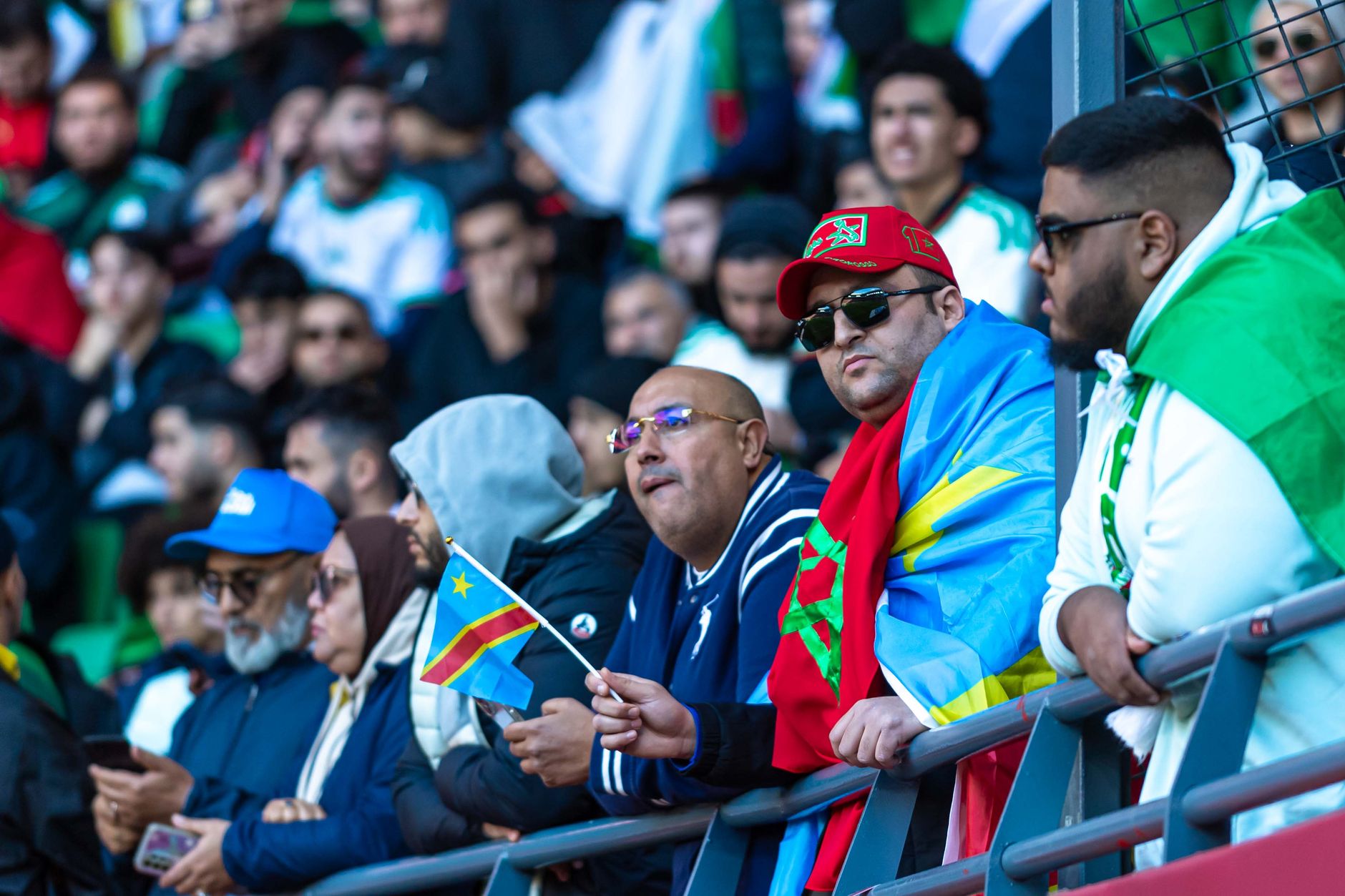
Photo by Guylain Kipoke on Pexels
To keep your World Cup 2026 preparation organized from the first whistle to the final, start with a focused source built around the tournament.
Frequently Asked Questions
Q: What is World Cup football 2026?
A: World Cup football 2026 is the next FIFA men’s World Cup, hosted by the United States, Canada, and Mexico. It will feature 48 teams, 104 matches, and 16 host cities from June 11 to July 19, 2026. The tournament adds a Round of 32, so finalists will play eight matches instead of seven.
Q: How do I follow World Cup 2026 predictions?
A: Follow World Cup 2026 predictions by tracking team form, injuries, tactical systems, travel schedules, and confirmed lineups. Football Compass focuses on match predictions, player stats, and tactical previews for fans who want structured coverage. Avoid relying only on FIFA rankings, because venue conditions and squad rotation can change match outcomes.
Q: What is different between World Cup 2026 and Qatar 2022?
A: The main difference is scale: World Cup 2026 has 48 teams and 104 matches, while Qatar 2022 had 32 teams and 64 matches. The 2026 tournament is also spread across three countries instead of one compact host nation. That makes travel, climate, and recovery more important than in 2022.
Q: Why might World Cup 2026 predictions fail?
A: World Cup 2026 predictions may fail because the expanded format increases uncertainty and creates more bracket variation. Travel distance, altitude in Mexico City, heat in some U.S. venues, and late squad injuries can all distort pre-tournament models. The safest approach is to update predictions after draws, lineups, and rest schedules are confirmed.
Q: How much will it cost to attend World Cup football 2026?
A: The total cost will vary widely, but fans should budget for tickets, flights, hotels, local transport, food, and possible cross-border travel. Official ticket prices and phases should be checked through FIFA channels when released. Because host cities include places such as New York, Los Angeles, Toronto, and Mexico City, accommodation prices may rise during match windows.
Q: Is betting on World Cup 2026 worth it?
A: Betting on World Cup 2026 may be worth it only if treated as entertainment with strict limits and informed analysis. The expanded format creates more markets, but also more uncertainty around rotation, motivation, and travel fatigue. Use implied probability, compare odds, and never stake money needed for essential expenses.
Thank you for reading.
Football Compass · Strategic Archive