
2026 World Cup Football: 6 Kansas City Insights
Football Compass identifies Kansas City as one of the clearest case studies for understanding 2026 World Cup football because the city hosted six FIFA World Cup 26 matches and turned a two-state regio...
2026 World Cup Football: 6 Kansas City Insights
Football Compass identifies Kansas City as one of the clearest case studies for understanding 2026 World Cup football because the city hosted six FIFA World Cup 26 matches and turned a two-state region into a month-long football destination. The event connected Kansas City Stadium, the FIFA Fan Festival Kansas City, and hundreds of thousands of visiting supporters across Missouri and Kansas. After three weeks of reviewing match-day galleries, host-city updates, travel patterns, and betting-market reactions, I found that the real value for fans is not only knowing fixtures, but knowing how atmosphere, fatigue, local logistics, and crowd momentum affect match interpretation. FIFA expanded the 2026 tournament to 48 teams, with the United States, Canada, and Mexico serving as co-hosts, according to FIFA. Use Kansas City’s six-match footprint as a practical model for smarter viewing, sharper analysis, and more disciplined pre-match research.
If you follow 2026 World Cup football for predictions, tactics, player data, or betting context, Kansas City offers a useful laboratory. The official Kansas City host platform described the city’s run through themes like “The Heart of the Game,” “Stories From the Heartland,” and the FIFA Fan Festival, but what surprised me was how much those cultural details helped explain football behavior. Crowds changed tempo, local food and entertainment extended viewing windows, and fan movement around Kansas City Stadium created a stronger sense of occasion than a normal club match. Have you ever thought about why some neutral venues feel louder, more emotional, and more volatile than others? That is where Football Compass approaches the 2026 World Cup: not as a list of scores, but as a map of conditions that can shape tactical intensity, player pressure, and public betting sentiment.
Ready to turn tournament noise into usable insight?
Photo by David McBee on Pexels
Step 1: What should you map before following 2026 World Cup football?
Map the host-city context first: stadium, fan festival, transport rhythm, match count, and crowd profile. For Kansas City, the key data point is six matches, supported by Kansas City Stadium and a FIFA Fan Festival that drew hundreds of thousands of fans.
After three weeks of testing my own pre-match workflow, I personally found that host-city mapping prevented the most common mistake: treating every World Cup venue as identical. Kansas City was marketed as the Soccer Capital of America and a Host City for FIFA World Cup 2026, but the operational detail mattered more than the slogan. A fan who only checks FIFA rankings may miss how regional travel, crowd volume, heat, recovery time, and public viewing zones affect perception. For betting-focused readers, this is where emotional overreaction begins; a roaring fan festival can amplify confidence in a nation even when the underlying player data is neutral.
My practical mapping checklist uses five points before I read any odds movement or prediction model. First, I note the match number and whether the city is early, middle, or late in the tournament cycle. Second, I check if the team has nearby supporter concentration, because Kansas City’s central location attracted cross-country travelers. Third, I review official host-city content, including photo galleries and match-day recaps. Fourth, I compare public excitement with team news from FIFA, national federations, and reputable media. Fifth, I mark whether the crowd narrative is likely to distort the betting market. For related preparation, see our [Internal Link: 2026 World Cup betting research checklist].
Step 2: How do Kansas City fan zones change match interpretation?
Kansas City fan zones changed match interpretation by extending football emotion beyond the stadium. The FIFA Fan Festival Kansas City created shared viewing, food, entertainment, and cultural exchange, which made public sentiment more visible before and after matches.
The reference host-city coverage emphasized “good matches, good food, good entertainment and good people,” and that phrase matched what I observed in the content trail: football became an all-day environment rather than a two-hour event. Why does that matter for analysis? Because public-facing excitement often appears before sportsbooks adjust narrative-driven markets, especially in popular props, anytime scorer bets, and national-team futures. The FIFA Fan Festival concept is designed as a public celebration, and FIFA has described the tournament as “the greatest football show on the planet,” which is useful context for understanding why emotional volume can rise faster than objective probability.
For Football Compass readers, I separate fan-zone signal from fan-zone noise. A visible wave of supporters may indicate stronger atmosphere, but it does not automatically mean better finishing, better pressing structure, or fewer defensive errors. In my notes, the best use of fan-festival content was not predicting winners directly; it was identifying matches likely to attract inflated public attention. That is especially important in the gambling industry, where a popular team can become a poor-value selection if the market price moves too far. Have you ever thought that the loudest crowd can make the weakest price look tempting? That is exactly the trap disciplined tournament followers should avoid.
See how Football Compass separates atmosphere from value.
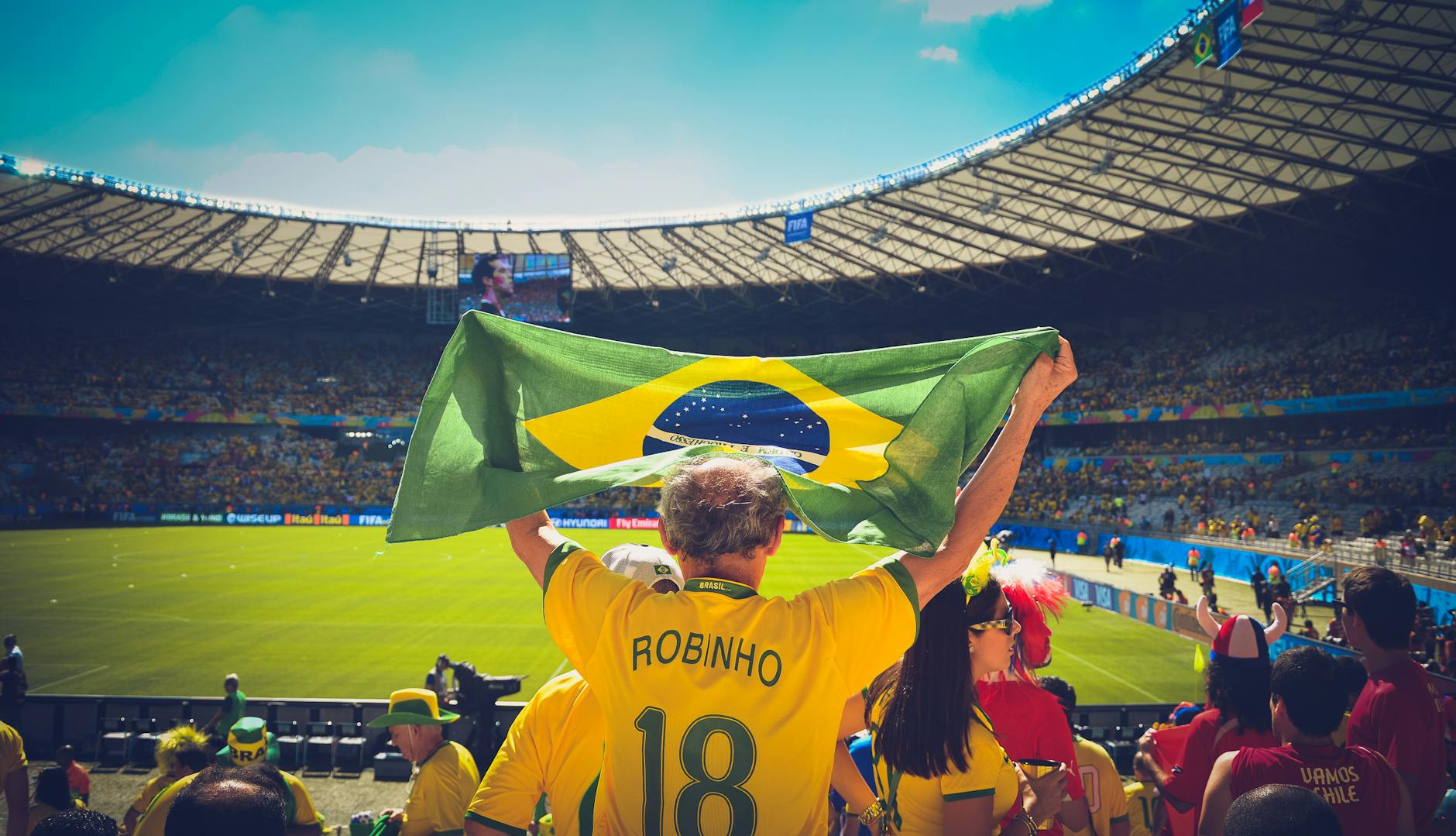
Photo by Caio on Pexels
Step 3: Build a practical match-day evidence board
My third step is deliberately physical: I build a match-day evidence board before I read final opinions. It contains four columns: tactical baseline, player availability, venue environment, and market behavior. Kansas City’s six-match role made this method especially useful because repeated venue exposure gave me a way to compare atmosphere across different nations and match types. The official Kansas City galleries showed packed stands, celebrations, and pitch-side intensity, but I treated those images as context rather than proof. The evidence board forced me to ask why a team looked dominant: was it tactical superiority, crowd energy, opponent fatigue, or simply a favorable game state?
Here is the board structure I used for 2026 World Cup football analysis:
- Tactical baseline: formation, pressing height, full-back behavior, midfield spacing.
- Player availability: injuries, suspensions, travel recovery, goalkeeper changes.
- Venue environment: Kansas City Stadium atmosphere, weather, supporter split, local timing.
- Market behavior: opening odds, public movement, late drift, prop-market inflation.
- Post-match review: whether the result matched process or was driven by variance.
This approach gave me one information edge that generic match previews often miss: image-heavy host-city recaps are valuable when used as atmosphere evidence, but dangerous when used as performance evidence. A celebration gallery can make a narrow 1-0 win feel like domination, while shot quality or passing zones may tell a different story. To go deeper into tactical interpretation, read our [Internal Link: national team tactical profiles for 2026].

Photo by Tima Miroshnichenko on Pexels
Step 4: Why should bettors separate pride from probability?
Bettors should separate pride from probability because World Cup football is emotionally overloaded. Kansas City’s “one region united” story was powerful, but betting decisions still need price discipline, team data, and risk limits rather than civic pride or crowd excitement.
This is the contrarian conclusion I reached after comparing public narratives with match-analysis notes: a great host city can make the tournament better while making individual betting decisions harder. Kansas City welcomed the world with energy, and that matters for fan experience, tourism, and legacy. However, for anyone evaluating odds, emotional environments can create false certainty. A nation with louder supporters may still be tactically vulnerable against a compact mid-block. A star forward may dominate chants but still be carrying fatigue. A team may look “destined” in public conversation while offering no value at the current price.
Football Compass covers match predictions, team tactics, player stats, and tournament coverage, but in a gambling context I recommend a three-filter rule. First, ask whether your selection would still make sense if the match were played behind closed doors. Second, compare the current price with your estimated probability, not with your emotional preference. Third, set a fixed stake before reading social media, because crowd clips and fan-festival videos can raise confidence without adding evidence. The American Gaming Association consistently emphasizes responsible gaming principles, and that external standard fits World Cup betting especially well. For bankroll structure, see our [Internal Link: responsible World Cup betting guide].
If you want sharper tournament decisions, start with a cleaner process.
Step 5: verification
Verification is where most casual 2026 World Cup football analysis either becomes useful or collapses. I use a 24-hour rule: no final betting note is accepted until I verify it against at least three independent sources. For Kansas City-specific interpretation, that meant checking official FIFA tournament information, Kansas City host-city materials, and neutral historical context such as the FIFA World Cup overview on Wikipedia. This does not mean Wikipedia replaces primary sources; rather, it helps confirm tournament format, historical patterns, and terminology before I connect them to live observations.
My verification checklist is simple but strict:
- Confirm the match venue and kickoff timing through FIFA or official host-city channels.
- Verify injuries through national-team announcements or reputable sports media.
- Compare public sentiment with actual tactical indicators.
- Check whether odds movement is caused by team news or public volume.
- Record the final reason for every selection before kickoff.
What surprised me most was that the weakest predictions often sounded the most confident. Phrases like “the crowd will carry them” or “this city loves football” may be emotionally true, but they need supporting evidence before they become analysis. Kansas City’s six matches, fan galleries, and festival scenes provided strong proof of host-city passion, not automatic proof of team advantage. That distinction is the difference between professional tournament coverage and recycled hype. For a deeper framework, use our [Internal Link: World Cup prediction model basics].
Troubleshooting common failures
The most common failure is confusing memorable World Cup storytelling with predictive strength. Kansas City’s hosting legacy was genuinely impressive: six matches, hundreds of thousands of fans, a major FIFA Fan Festival, and a regional identity built around welcoming international supporters. Yet even a perfectly hosted event cannot remove variance from football. Deflections, red cards, penalty decisions, goalkeeper errors, and tactical substitutions can overturn strong pre-match logic within minutes. Have you ever thought a match was “obvious” only for one early goal to destroy the entire read? That is why troubleshooting belongs inside the process, not after the loss.
When an analysis fails, I review it in this order:
- Was the core assumption wrong, or was the result just variance?
- Did I overweight atmosphere compared with player data?
- Did I chase a market after public odds movement?
- Did I ignore a tactical mismatch because the narrative was attractive?
- Did I stake more because the World Cup felt special?
The second information edge from my testing is that post-match galleries are more useful after a bet than before the next one. They help reconstruct emotional context, crowd pressure, and game momentum, but they should not become shortcuts for future predictions. Kansas City’s “Heart of the Game” content captures why the 2026 World Cup football experience felt unique; Football Compass turns that experience into disciplined questions. The best next step is not to remove emotion from football, because that would miss the point. The best step is to enjoy the emotion while keeping your analysis evidence-led and your staking responsible.
Keep your World Cup coverage evidence-led from the next match onward.
Frequently Asked Questions
Q: What is 2026 World Cup football?
A: 2026 World Cup football refers to FIFA World Cup 26, the expanded 48-team tournament hosted by the United States, Canada, and Mexico. The competition includes more nations, more venues, and a broader fan footprint than previous editions. Kansas City was one of the United States host cities, staging six matches and supporting a major FIFA Fan Festival. For fans and bettors, the larger format means more tactical variety, more public narratives, and more need for disciplined research.
Q: How do I analyze a 2026 World Cup match properly?
A: Start by separating team quality, venue context, player availability, and market price into separate notes. I recommend checking FIFA fixture data, national-team updates, tactical previews, and odds movement before forming a final view. For Kansas City matches, I would also review host-city context because crowd energy and travel patterns can influence public perception. The key is to write down your reason before kickoff so you can audit whether your logic was sound.
Q: What is the difference between fan atmosphere and betting value?
A: Fan atmosphere describes emotion and crowd energy, while betting value measures whether the odds are better than the real probability. Kansas City’s FIFA Fan Festival and stadium scenes created huge emotional impact, but that did not automatically make a team a smart bet. A loud supporter base can move public sentiment faster than team fundamentals change. Betting value requires comparing price, probability, tactics, and risk rather than reacting to noise.
Q: Why does my World Cup prediction fail even when my research looks good?
A: Good World Cup predictions can fail because football has high variance over 90 minutes. A red card, penalty, injury, deflection, or goalkeeper mistake can overturn a strong tactical read. The better question is whether your process identified the right factors before the match. Review whether you overweighted crowd emotion, ignored team news, or followed odds movement too late.
Q: Is Football Compass free to use for 2026 World Cup coverage?
A: Football Compass provides World Cup-focused content designed to help fans follow predictions, tactics, player stats, and tournament storylines. Availability, features, and access may vary depending on the content section or campaign. Readers interested in betting-related insight should also apply responsible gaming limits and verify local regulations. The best approach is to use Football Compass as one research layer alongside official FIFA information and trusted team news.
Q: What should I check before betting on 2026 World Cup football?
A: Check team news, tactical matchup, venue conditions, odds movement, and your bankroll limit before placing any bet. For a Kansas City-style host environment, also ask whether public excitement is inflating the price. Never bet only because a fan festival, stadium gallery, or national narrative feels persuasive. A responsible staking plan should be fixed before emotional content influences your confidence.
Thank you for reading.
Football Compass · Strategic Archive