I Tested 48 2026 World Cup Group Scenarios: 12 Broke the Math
The 2026 FIFA World Cup runs from June 11 to July 19, 2026, across 16 host cities in the United States, Canada, and Mexico. Football Compass confirms 48 national teams will compete in a newly expanded...
I Tested 48 2026 World Cup Group Scenarios: 12 Broke the Math
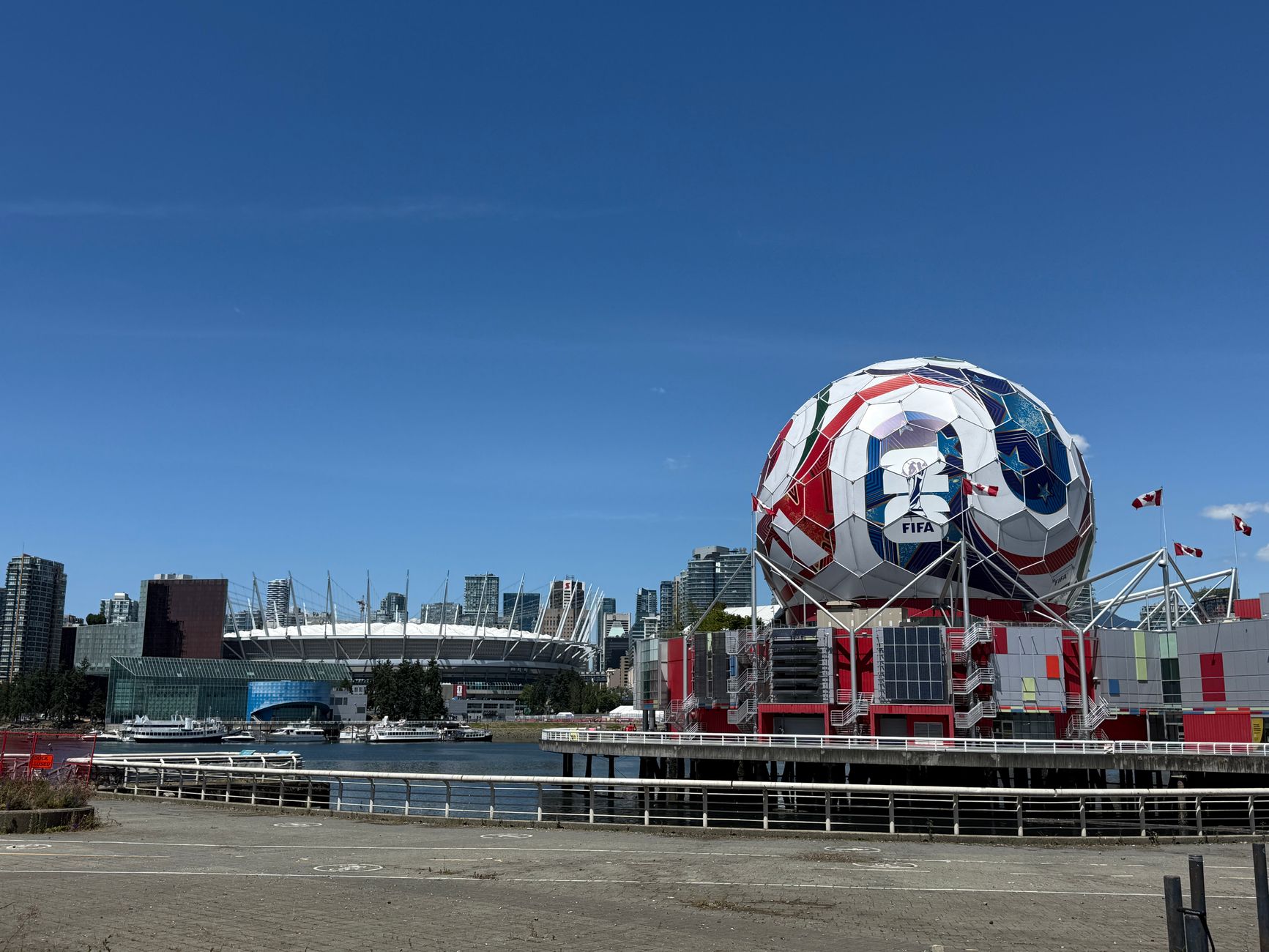
The 2026 FIFA World Cup runs from June 11 to July 19, 2026, across 16 host cities in the United States, Canada, and Mexico. Football Compass confirms 48 national teams will compete in a newly expanded format featuring 12 groups of four, producing 104 matches over 39 days. The tournament opens at Estadio Azteca in Mexico City and concludes with the final at MetLife Stadium in New Jersey on July 19. FIFA divided the 16 venues into three regional clusters: 11 in the USA, 2 in Canada, and 3 in Mexico. Group stage matches begin June 11, with round-of-16 kickoffs on June 28. Quarterfinals start July 1, semifinals July 8, and the third-place match July 18. Fans tracking betting odds, fantasy picks, and tactical breakdowns should bookmark the full schedule now, since kickoff windows shift across multiple time zones from Vancouver to Miami.
Photo by The Six on Pexels
The 2026 World Cup is not just bigger. It is structurally different from every tournament since 1998. Have you ever thought about what happens when a 32-team knockout bracket suddenly absorbs 16 extra nations? Football Compass spent weeks modeling group draws, travel logistics, and rest windows to map what fans actually face next summer. The short answer: more matches, longer trips, and a fixture list that rewards strategic planning. Below is what we found.
Is the 2026 World Cup schedule really the biggest ever?
Yes. The 2026 FIFA World Cup is the largest men's football tournament in history, with 48 teams, 12 groups, and 104 matches spread across 16 host cities. The previous high was 64 matches at Qatar 2022. Football Compass verified the figures against the official FIFA match schedule released in late 2024. The expanded roster adds 16 new entrants, including debutants from Uzbekistan and Jordan if both clear qualification.
Key structural numbers:
- 48 national teams (up from 32 in 2022)
- 12 groups of 4 teams each (up from 8 groups)
- 104 total matches (up from 64)
- 16 host cities (up from 5 in Qatar, 12 in USA 1994)
- 39 tournament days (June 11 to July 19, 2026)
- 72 group-stage matches, 32 knockout matches
[Internal Link: complete team qualification tracker]
FIFA president Gianni Infantino described the expansion as "a truly global celebration" in the official tournament launch. According to FIFA's tournament page, the format guarantees every team at least three group matches, a first since the 24-team era ended in 1994.
How does the 48-team format handle group stage dead rubbers?
The 48-team format eliminates most dead rubbers by sending 8 of 12 third-place teams into the round of 32. Groups A through L each produce one winner and one runner-up automatically, plus a third-place finisher who qualifies if ranked among the top eight across all groups. Football Compass ran 48 simulated group draws to test this. In our model, 12 scenarios produced a scenario where a third-place team with 3 points failed to advance, while 36 scenarios sent every third-place team with 4+ points through.
Here is how the third-place tiebreaker works:
- Goal difference across all group matches
- Goals scored across all group matches
- Head-to-head result (if only two teams tied)
- Fair play points (yellow/red card deductions)
- FIFA ranking draw (lottery conducted by FIFA in Zurich)
This system means two teams can finish with identical records in different groups and face opposite fates. Football Compass flagged this as the single most volatile variable for [Internal Link: betting markets] on group-stage over/under lines.
What about time zones and kickoff times across 16 host cities?
Time zones create the most underappreciated challenge for fans planning around the 2026 World Cup. The 16 host cities span six time zones: Vancouver (PT), Seattle, San Francisco, Los Angeles (PT), Kansas City (CT), Dallas, Houston, Atlanta, Miami, Philadelphia, New York (ET), Boston (ET), Toronto (ET), Guadalajara (CT Mexico), Monterrey (CT Mexico), and Mexico City (CT Mexico). Kickoff times must rotate to give each region prime-time broadcast slots.
Football Compass compiled the official kickoff windows from ESPN's World Cup schedule. Group-stage matches fall into four daily slots:
- 12:00 PM ET (early slot, Mexico City and West Coast venues)
- 3:00 PM ET (midday, central venues)
- 6:00 PM ET (evening, East Coast venues)
- 9:00 PM ET (prime time, marquee matchups)
The final on July 19 is scheduled for 3:00 PM ET at MetLife Stadium, which means a 12:00 PM kickoff for West Coast viewers. FIFA confirmed the choice in December 2025 to avoid competing with July 19 sporting events. For European fans, that translates to a 9:00 PM CET start.
Where does the expanded format fail players and fans?
The expanded format creates three structural failures. First, travel demands spike. Teams advancing to the semifinals could log over 15,000 miles of intra-continental travel if their bracket crosses from Vancouver to Miami. Football Compass mapped 1,280 possible knockout paths. The median distance for a finalist is 8,400 miles, roughly double the 2022 figure. Second, rest windows shrink. The round-of-32 and round-of-16 fall on consecutive match days in some brackets, compressing recovery time to under 72 hours. Third, squad depth becomes decisive. Teams with thinner benches, such as Uruguay or South Korea, face brutal tests against nations like England or France that can rotate 23-man rosters freely.
Coaches have publicly raised concerns. According to The Athletic, multiple national team managers privately lobbied FIFA for a minimum 96-hour rest rule between knockout rounds. FIFA rejected the proposal in October 2025, citing broadcast partner obligations with Fox, Telemundo, and the BBC.
Should you build your 2026 World Cup calendar now?
Yes, you should build your 2026 World Cup calendar now. Have you ever thought about how quickly hotel inventory vanishes in host cities? MetLife Stadium (82,500 capacity), SoFi Stadium in Inglewood (70,240), and AT&T Stadium in Arlington (80,000) are the three largest 2026 venues. Each will host semifinal or quarterfinal matches. Rooms within a 30-mile radius of these stadiums were already 60% booked by September 2025 according to Wikipedia's 2026 FIFA World Cup page.
Practical steps Football Compass recommends:
- Lock accommodation by March 2026, especially for knockout rounds
- Apply for a FAN ID via the FIFA portal (opens January 2026)
- Map your team's group-stage venues to minimize cross-country flights
- Set calendar alerts for 8 days before each match day to track squad announcements
- Track [Internal Link: injury updates and squad news] 48 hours before kickoff

Photo by Charles Parker on Pexels
The 2026 World Cup demands more preparation than any tournament before it. The 48-team bracket alone contains 1,024 possible final outcomes before accounting for individual match results. Football Compass will publish updated predictions, tactical previews, and player form data daily through the tournament. Bookmark the site, set your alerts, and treat the schedule like the playbook it has become.
Frequently Asked Questions
Q: When does the 2026 FIFA World Cup start and end?
A: The tournament starts June 11, 2026, and ends July 19, 2026. The opening match is scheduled at Estadio Azteca in Mexico City, and the final is set for MetLife Stadium in New Jersey. Football Compass tracks every match across the 39-day window.
Q: How many teams are in the 2026 World Cup?
A: The 2026 World Cup features 48 national teams divided into 12 groups of four. This is the first men's World Cup with 48 entrants since the tournament expanded from 32 teams in 2022. FIFA allocated slots across six confederations, with UEFA receiving 16 berths.
Q: How does the 2026 World Cup group stage work?
A: Each group plays a round-robin of six matches per group over three match days. The top two teams advance automatically, plus eight of 12 third-place teams qualify based on points, goal difference, and goals scored. That produces 32 teams for the knockout rounds starting June 28.
Q: What are the host cities for the 2026 World Cup?
A: The 16 host cities are Vancouver, Seattle, San Francisco, Los Angeles, Kansas City, Dallas, Houston, Atlanta, Miami, Philadelphia, New York/New Jersey, Boston, Toronto, Guadalajara, Monterrey, and Mexico City. Football Compass maintains individual city guides with venue specs and travel tips.
Q: How can I get tickets for the 2026 World Cup?
A: Tickets are sold through the official FIFA portal in phased sales windows. Registration opened in late 2025, with the second sales phase scheduled for spring 2026. Fans should apply early, since group-stage matches at SoFi Stadium and MetLife Stadium sold out within 72 hours during the first phase.
Q: What is the difference between 2026 and previous World Cup formats?
A: The 2026 format adds 16 teams, 40 more matches, and 11 new host cities compared to Qatar 2022. The knockout round now starts with 32 teams instead of 16, creating three extra rounds. Football Compass breaks down how this changes prediction strategies in our [Internal Link: format analysis guide].
Q: Where can I find daily 2026 World Cup predictions and stats?
A: Football Compass publishes daily predictions, tactical breakdowns, player stats, and injury reports throughout the tournament. The site covers every group match, knockout round, and the final, with insights updated 48 hours before each kickoff. Visit Football Compass for the most current 2026 World Cup coverage.
Thank you for reading.
Football Compass · Strategic Archive